Hearing Aids Don't (Exactly) Help You Hear.
categories:
- “computers”
- “life”
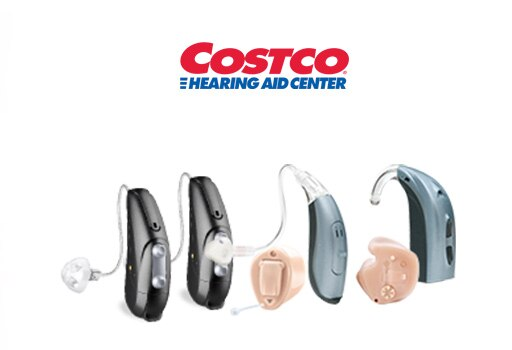
The title isn’t misleading nor are the tags. Hearing aids don’t exactly help you hear. And modern ones are all about computers. The best hearing aids in their best moments are almost a super power. But the vast majority of moments are spent figuring them out or working around their limitations.
The Computers: A hearing aid is a monolithic integrated circuit with power, mic, and speaker lines. Oh, and a button or two. My current tuner who’s my age, worked back in the day when her shop had tools to repair them. She told me of the days when tuning was a jeweler’s screwdriver and a single adjustable potentiometer. Nowadays, it’s all mouse-clicks. And some ridiculously expensive devices to produce insanely predictable sounds and listen to what you're hearing. It’s weirdly comfortable-stimulating to get that incredibly thin tube tucked alongside your new hearing aid for this test. The funnest part, though, is listening to the calibration “tape”: it’s a woman who must speak +6 languages. They gave her a script of words, then edited out all the vowels. I recognize sounds that seem pretty likely German, Hebrew, and plain ol’ English. Oh, and French. It’s pretty likely the same woman, her pitch, tone, and modulation are so uniform. I’d love to believe she was paid a fortune as befits those skills, but it’s possible they simply bought some translator time at $4/hr or whatever horrible pittance those folks are paid. (Sister-in-law has done this, and it’s even worse than you think: She competed against herself as multiple companies bid out her skills.)
Super Powers: I remember long-ago, maybe my 1st or 2nd pair (they only “last” the 3 years of their warranty) and it was after a recent tuning, that I went hunting with my dad. My daughter had always been fascinated with what the dogs did, the process, etc. So my dad took us out to a farm where his dogs are trained and they let loose some pheasants they raise for this purpose. Let me remind that pheasants are an invasive species here in North America, introduced by ye olde white men for the sport of killing. I will admit, they are beautiful birds, but they no more belong here than I do. It was a cool fall day in a field of stubble, my dad was armed as I don’t even shoot things let alone critters. We walked along, the dog was doing her thing in Olympic perfection, the occasional bird was blasted. And the hearing aids simply eliminated the noise. Perfectly. Like some kind of magical, high-tech hearing protection. (Which, in fact, they’re supposed to be, but more on that later.)
Working Around Their Limitations: Keep that fall day’s wonder at their perfection in mind. Now bring back the computer stuff. Hearing aids have a lot of software and electrical engineering (analog behavior) to amplify sounds. All that complexity can get confused. Let’s start with loud stuff and protection. The hunting story was a unique time and event, I’ve never found any hearing aid to seem that protective of obviously dangerous sound levels again. Some of it I understand: if the sound persists, the software begins to think it’s normal, and starts to let it through. Makes sense, one of the problems with old-school audio compressors is they’re not very smart, they can face out or fight a long, sustained note. Gotcha. But when my probably-failing air-compressor roars on, they might kill the volume for an instant, but pretty rapidly, they’ll start to play it through. And it gets worse: the software will notice a high-frequency component to the sound, decide that’s consonants, and mix it louder!
Pause for background: Hearing aids are medical devices. Not like glasses, but like pacemakers. That means that they are rigidly regulated to never cause harm. They have a limit called “Maximum power output” (MPO) which is enforced both by software AND careful electrical engineering of the power-consumption. So even if the software says “boost the shit out of this signal” the amplifier will find there’s not enough available power to do it. That analog compression or fading of the signal is rare in digital hearing aids, but I think I’ve heard it happen in rare conditions. Each hearing aid and every tuning has a different magic circumstance like that, but once I find it on these new ones, I’ll let you know. So MPO is a hard limit. The hearing aid will literally fail, perhaps even permanently, if it tried to cross that.
Nonetheless, I can setup any number of situations in which my eardrums are clearly being driven to painful “flapping”. So maybe technically the little MPO-accountant sez it’s not too loud, but practically speaking, we’re way past “holy shit.” More Background: I worked with giant sound systems. I’ve listened to sound pressure levels that are illegal. Played “Walk on the Wild Side” so loud that the bass notes were literally moving the cuffs of my pants. Standard Warning: don’t do as I did, folks. That’s why I wear these things. But would I do it again? Fuck yes. I love music.
Back on Track: Figuring Hearing Aids Out. The vast majority of notable events (see my confirmation bias there?) in hearing aid use is figuring out WTF they’re doing at that moment. Ambient sounds or streaming music will suddenly do a 3s fade down 6dB. (That’s a lot.) Or all the mid-range will fade out. Or the high-frequencies will pretty abruptly drop off. Then {whatever} will slowly unhappen. Fans can be trippy. A slow-moving ceiling fan can cause air-movement over the mics that gets perceived as infra- or hyper-sonic energy. Remember the MPO? Well, if the total environmental acoustic energy—including stuff you can’t hear—gets high, then time to fade down the audio. Even if it’s a signal you can’t hear.
I’ve had the benefit of working with some great tuners. And some well-meaning ones. The latter group have their benefits: they’ll generally wave off my requests with some platitudes but in so doing they’ll reveal the hidden limitations of the tuning-ware. Yes, I acknowledge that those folks will mostly be revealing the weakness in their computer-skills or training in the software (which is usually new to them, in their defense.) The great tuners actually try their product.. I don’t know if they try them enough to hear what I’m talking about. My wife has made it pretty clear that I hear stuff most people don’t. (Even in my current state, I do a Radar O’Reilly on sirens and mechanical noises.) So maybe they don’t get the full experience of WTF.
Let me give you a recent one. Go listen to “time machine” by Fousheé. There’s a (mono?) mixed rhythm guitar. Very mid-range. This thing plays from my speakers and it totally kills all 3d spatial perception. The guitar drags the rest of the mix right inside my fucking head. Please relax, I have quite a bit of experience with spatial sound systems. I don’t own one. And I know what 5 or 10 degrees of phasing will do. This is the exact opposite: it drags everything to a psychoacoustic point inside my skull. It’s at once very cool and very disorienting. And it’s novel. Hearing aids in general have terrible direction-finding. Like multifocal lenses making (some) new wearers trip down stairs. Got that, handled it. This is radically different. Instant LSD trip. And very concerning, because what happens if I’m driving a car? I think I’ll ask that wonderful partner of mine to drive someplace and play this song. See what happens. I wish I had my old Focus SVT, I’d love to mess with the sound-imaging features of that stereo and this song.
Wrapping it up: What DO Hearing Aids Make You Hear? If it wasn’t obvious, they make you hear them. All the time. Not the sounds around you, the sounds they feed you. When I resumed wearing glasses full time 20 years ago, I was aware of the absence of the frames when I went to bed at night. Instead of a bright-spot after a flash, it was like a dark-spot that’s never there. Hearing aids aren’t the frame, they’re the whole scene. I’m constantly inventorying “What can’t I hear right now?” And at the same time going “Why the fuck is everything so damned loud?” Why does crinkling plastic make any noise at all, let alone so very much of it? Plumbing, how the hell do you normals tolerate the incredifuckingawful sounds toilets and faucets make? (I hate aerators so bad I can’t tell you.) And with the new hearing aids, when did our aging Prius become a goddamned Bentley? What happened to the clatter-rattle-sqeak our 60k mile dashboard was beginning to make?
See what I mean? Hearing aids don’t make anything easier. They make the mechanical work of hearing some noises—maybe even speech—easier, but they make the cognitive load of listening much, much harder. Sure beats the constant ringing I’d have to listen to without them, so I guess I’ll keep on using them.