Theory: The Robot Uprising Won't.
categories:
- “blogging”
- “networks”
- “ramblings” tags:
- “random-crap”
Greetings Gentle Reader,
This is incompletely formed, but on today's lovely ride home, I was wondering about the myth of the package delivery company taking all right turns. Subject of a Mythbusters episode, I believe they missed the problem by focusing on gas-mileage. Fuel economy, if you prefer. Anyway, I'd thought that the deciding factor in path-improvement would be the labor costs, not the equipment-operation costs.
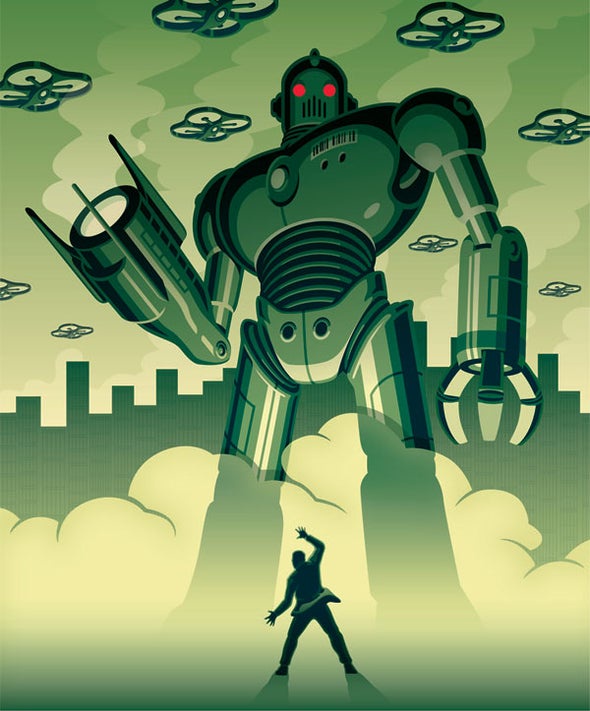
Then I thought about ubiquitous robot labor, and it forming a union to demand...what? And back-tracking from that, it occurred to me that one impediment to ubiquitous robotics is the societal costs of failure. Google's gonna be sued to the moon for the first pedestrian or passenger killed by one of their self-driving cars.
Let's get specific, I'm not talking about the cost of the lawsuits for failure, I'm talking about the costs of a risk-averse corporate entity trying to insure that all their networked-distributed cyber labor will not suddenly develop a taste for meatbags.
We have precedents. The aviation industry, specifically TCAS, and the medical industry, specifically, the ABSENCE of network-aware equipment both serve to illustrate the costs of future robo-labor.
TCAS (Traffic Collision Avoidance System) is a self-contained autonomous warning system that depends on all planes having radar and TCAS. It has ways of coping with small, non-TCAS or non-radar equipped traffic, but it's pretty limited. It's a phenomenal accomplishment but it took man-centuries of labor to be certain it would not fail in unpredictable ways. Also, that it would not interact in unpredictable ways. Now the FAA has decades of skill at setting lofty standards and vendors have paperwork tracing every single part and every line of code to prove the soundness of their product. This is all accessible, so if there's a problem, everyone along the chain will hang.
The medical industry has even more history in tracing every piece of a product's creation. The FDA imprimatur on my hearing aids has made them 800x more expensive than the sportsman's versions, but they've lasted on my head for almost 2000 days. Like FAA paperwork, this is such a high bar, that medical equipment makers eschew the Bluetooth this or WiFi that, and barely even employ RFID tags. The point-and-shoot logic of the barcode is embraced, because everyone can prove they've hit the right target, and received the right response. But does that IV pump next to your bed signal the nurse's station wirelessly to say you're out of saline? Yes, it's called a “beeper” and it's annoying as heck. Oh, and if you're room's door is closed, YOU have to signal the nurse that the signal is signalling.
So, how do these two similar stories of cautious control play into self-driving cars or electric housekeepers? They tell us that if we as a society are even half as careful as we have been in these 2 cases, then it will be a long, long time before you ride to work “handsfree.“ I'm suggesting that the pervasive robot will perpetually be “10 years away” like fusion and AI. We'll have plenty of successful trials, Google's cars, roomba, maybe sorta-anthropomorphic transfer-helpers for EMTs and nurses. But just as a robotic factory is confined to cells, and the networked controls between, beyond and outside those cells is more expensive than they are, I'm beginning to think that the automaton's arrival will be slower and lower than we expect. Before we get Rosie, we'll have smart(er) carpet.