The Basement in the Attic

My random meanderings on lived experiences & the thoughts they generate.


categories:

  • “life”
  • “motorcycling”
  • “ramblings”

”The cheapest part of every motorcycle is the owner.”

Diy fail 2

In the life of owning a “Lemon Law” motorcycle, I’ve been told now that it’s manufacturer is not responsible for any more repairs.  The dealer’s statement was kindly enough, but also vague enough that this may mean all/every repair ever.  Or just repairs related to the Lemon Law-branding on its title.

I’m not deterred quite yet.  At this point, the rider-input device has been a)re-wired, 2x, and b)replaced.  This leaves the next bit as “all the wiring between input and computer.”

The official manufacturer repair guide helpfully includes not one whit of info on how to replace a single “branch” of the wiring.  It doesn’t even instruct on how to replace a single connector’s branches of wiring.  It simply tells the mechanic how to replace the entire wiring harness.

Note: the last dealer operation, someone in shop told me they’d never seen a motorcycle disassembled that completely.  Implying that perhaps they were on the threshold of replacing the entire harness when {something intervened}.  For whatever reason, it was decided to replace the last foot of wiring toward the input device.  Using about 500% more wire than needed. (First rewiring.)  I went in and removed the several-ounces of bundled-up surplus. (2nd rewiring.) The problem persisted.

To be fair, the problem occurs really randomly.  When it does, the computers wisely all revert to a limping-mode because loss of accurate input is really dangerous.  All the ritual fixes like software updates do nothing because everything seems to have fixed it since the occurance.

A month later...

I’ve since purchased an entire wiring loom from eBay, carefully teased out just the 6 wires I needed, developed a means to release and replace those 6 pins from the 64 others in that connector, then installed my new wiring between control and computer.  A dozen rides since and no sign of the problem.  Of course, we’ll never know if that’s fixed it since the problem was randomly occurring.

I’ve also purchased on eBay the replacement for the engine part affected by this controller.  It would seem odd that the recipient of the commands could masquerade any role it might play if it had a problem but that seems like a possibility.  The fact that the bike was so heavily dismantled by the dealer implies they were on the cusp of replacing the wiring harness.  (That’s the ONLY wiring part for the motorcycle.  Imagine replacing 54lbs of wire because 6 strands were problematic.). As an unlikely cause, I’m ready to replace it next nonetheless.

I’ve also gained access to a source of information that can yield wiring diagrams.  That means I can now start to look into real specific electronic causes, even though I’ll get no insight into the various black boxes.  Still, this represents near X-ray vision into the workings I never had before.  I long for the days when Chilton and Haynes manuals had complete diagrams of my car’s wiring and plumbing.  I figured out a lot from that info over the years.

So here’s hoping.  I might still be the cheapest part of this equation, I’m hoping I don’t need replacing before necessary.

Edit from Feb 2022:

The wiring replacement was most likely successful.  Past repair attempts never went more than 6 months between onset of failures. Then repetition with increasing frequency until next attempt seemed to quell the gremlin.  Riding season 2021 had zero events.  I’m still practicing awareness, I ride at the back of any group.  I try to remind and rehearse the need for sudden clutch action at highway speeds.  But it seems like I can trust it.  Of course, having handled those incredibly thin, solid-core copper wires, and having routed them not through the official path, and having wrapped the bundle in not the approved material nor supported with the designed number of locations, now I get to worry about them failing anew.  But like coping with my first failed O2 sensor* I think I can handle it if this ever appears again.

*Important thing to remember about motos: engine-speed directly affects bike speed.  In a way not at all like cars, there’s no mass to dampen a sudden gain-loss-gain of +500 rpm when the closed-loop fuel-injection system goes bananas because the O2 sensor (the closure in “closed-loop”) looses its shit.  Especially at low, mopey-doping speeds, which is the only time an f-i engine’s ever in closed-loop mode.


categories:

  • “computers”
  • “life”
  • “networks”
  • “politics”

Greetings dear reader.  Let me remind you of my gratitude for you: I’m first and foremost, one of y’all.  I don’t pretend to be a writer, so your forbearance is treasured.

Now let me tell you about this new thing I got called a book.  It’s paper, between two hard covers, with a binding.  No batteries, wires, or pictures.  But wait, there’s more...

My goal is to convey the awe I’m enjoying with this process, event, occasion.  When you’re done, and you look at your personal awe-ometer think of mine as pegged.  Like walking around the base of a loaded heavy-lift launcher at T-24hrs, Sagrada Familia, the VAB, Grand Canyon, or the hall just outside the gallery with the Mona Lisa (it’s walls are TILED with paintings, knees to ceiling.)  Like alighting from a GT bike after enjoying 10% of its ability.  Like walking around McCormick Place while the Manufacturing Technology or Plastics show is loading.

The book is Cory Doctorow’s “Attack Surface” and though I’m only just starting, it’s rolling.  This is the 3rd of his Little Brother books, set in a world 20 minutes to the right, North, aft, and kersplxzides of ours, not so much “Future” as where surveillance capitalism’s costs are made transparent.  It helps to have read the 1st 2 books not just for the characters but as primers for vocabulary and the concepts of how innocuous conveniences are ruining our liberties while making us think they’re enabling them.

This is the first book I’ve read in years.  Despite the fact that I have ~500lbs of them, some have moved with me through 30 address-changes.  Before my daughter was born, her mom and I would visit Powell’s in Hyde Park (Chicago, related to but not part of the Powell’s used-book empire in Portland, OR) or even the mall-chain bookstores every pay-period.  We lived by the advice of Erasmus, buying books first then if we could, some food and clothes.  Happy times.  Then I got my first e-book; my memory is messing with me here, because I thought this would’ve been late-90’s but wikipedia leads me to believe it had to be the late-Oughts.  That transition went fast, and I haven’t bought a book in very close to 20 years.

Don’t get me wrong, I read whenever possible.  My partner has commented that I’m always in a screen at any moment; she’s quite adept at audiobooks but claims her consumption-rate is a fraction of mine.  I love the St. Paul Public Library, they’re the bestest.  I don’t miss bookstores, though I miss the frisson of selecting from them.  The artificial scarcity of ebooks my library is forced to comply with makes selection either “oh well” (immediate availability) or “oh shit” (having multiple holds all come up at the same time.)  Doctorow could do an hour out of this subject, easy.

When this new book was announced, the author also announced a novel distribution plan.  In short, he corralled his fanbase into funding his toppling of the standard publisher/author model.  He came within 1% of his goal that would’ve permanently altered book publishing.  (Next time, for sure and 2x.) My reward for participation in this was a digitally-signed copy of the ebook, which is so cool I can hardly contain myself.  I also received an invite to his virtual book-tour.* I bought a “ticket” to the 1st stop, to receive a copy of the book in exchange.

When the package arrived—my partner guessing correctly what it was, I was mystified—I opened it and …well, I kind of ran around the house a little.  I had to show her, proclaiming how long it had been since I’d bought an actual book.  I felt it’s weight, both less and more than I remembered, and then I opened it just to flip through.  What happened next was probably foretold somewhere in a screen when I committed to paying for it, but I’d forgotten or never read it.

It was signed.

To me.

“In solidarity”

I’ve seen videos of author signings, it’s a production line.  It’s absolutely amazing how systematic the process has become, the number and kinds of pens preferred, the minions who peel-flip and hand the books to the Author-themselves and whip-whisk-flurry to the other minion who folds-stacks.  I’ve seen those piles and since shipping-and-receiving has been part of my work since I was 13, I’ve just had a silent prayer for the shipping-minions.  And the last-mile, the delivery persons, hiking to put it in each address’s landing-spot.  So I get that this is now a bit more of a mass-produced experience than Holmes getting Moriarty to sign his copy.

See above: walking around a loaded, ready-to-go heavy lifter waiting for its launch-window.  Think of how rare that experience is because of the danger involved.  Danger to the person (it’s full of explosives), danger to the launcher (a blown-off baseball-cap or dropped lens-cap would halt the launch).  Think about the honor conferred to you receiving that opportunity.  Think about how unbelievably serious the pre-visit safety-talk would be, how detailed they’d be.

Now think about an amateur in the crusade for humans’ digital-rights and information-freedom and informed appreciator of those with skills upon seeing that handwritten note in the front of an untapped adventure in both those fields.  Are you getting there?  Do you get both the little-boy fan-giggle along with the experienced-eye filling with wonder each time I pass that page?  And I’m making a point of passing that page every time I open the book.  If glances eroded ink, this embellishment will soon be faded.

Did you notice that we haven’t really gotten to the 1st page yet?

I started reading as an escape from the 2020 election, a situation where as always happens, the worst-case forecast can never be as bad as it actually turns out.  I’m writing this on E+2 days, so I’ll expect someday to revisit this and laugh at my ignorance.  So I’ll go to my general instantiation: we should never plan “worst case scenarios” because they always always always reinforce our personal narratives (See: Conspiracists and Preppers).  The real-world “worst case” always has an element of unexpected, and you can’t include that in your planning.  Because “unexpected.”  That’s why I wish I could do more/better meta-planning for bad outcomes.  Map out the paths to the present, list their failure-spaces, work to contain those.  Instead of fantasizing of “what” could go wrong, worry about defending against “how”.  Sorry, tangentialized there, let’s wrap it with this: My plan to avoid all news until Dec 8th’s end of the federal Safe Harbor hasn’t worked well, and I’m pretty stressed.

So I opened the book with strangely low expectations and even though I’d read the other 2 books, no idea where in the author’s universe I would pop. Oh boy, did it pop.  I’m pretty sure the financial services company’s network test & cert lab was almost exactly like the one the book opens in.  Minus the Soviet history and guards.  And hoo-boy did I sympathize with working across the whole damned site to install one new thing: we had pretty poor documenting and terrible team interoperability in that place, so every new thing amounted to researching everyone else’s fiefdoms (past/abandoned ones are like landmines) to get the latest thing up and running for the latest fad.

I’ve just realized for the 50th time that I may’ve lost the mission here: I want you to leave with some share of the awe and pleasure I’m getting from an experience.  “Joy shared is increased; Pain shared is lessened,” said Spider John Robinson.  And this is a time where we need to share joy, to organize around our shared joys, to take the energy earned there to lessen the shared pain of those who’s voice harm and have highlighted harm we’ve done without thinking.

All that from a book.  Just a book.  A wonderful, marvelous, amazing book by a person who really knows his shit and has shared it both big—in the novel—and small—in his inscription of my copy.

I hope you’ll consider reading the book, I wish you will read all of Cory Doctorow’s books.  I have a friend of such opposite beliefs that I shake my head at our friendship many times.  But read Doctorow’s books and learned something he has.  He’s still a firm believer in late-stage capitalism’s virtues, but he probably would describe me in the bitterest buzzwords of his chosen in-group.  Anyway, he’s in this paragraph because I believe he’d echo my endorsement of the book’s adventure and it’s lessons.  If you don’t wish to pay, get it from your library.  Check out the physical copy if you’d like your privacy.  The offline-time spent reading is beneficial.  And there’s no more rabid fighter for privacy and information-freedom than a librarian.  They’ve been at it a long time, you’ve never noticed this side of them, but ask or trust me: I met one of the University of Hawaii’s back in the 90’s and I was gobsmacked at the level he spoke.  Not merely opposing book-banning, but the profound, structural crusade that information-freedom and privacy turn out to be 2 sides of the same coin.

Go.

Read.

Learn.

Love.

*Too many parentheses, a sign of poor self-edting.  This is a worse sign, midstream adoption of an alternative.  Herein, note to future selves: in the time of COVID, travel and gatherings curtailed, an author’s cities-tour to read and promote her work has been harmed.  Doctorow, like most authors, adopted a virtual-tour strategy, he’s chosen to partner with local book stores.  The first “stop” was The Strand in NY.


categories:

  • “life”
  • “motorcycling”
  • “ramblings”

Greetings Dear Reader,

One hopes you are well and enjoying rich experiences where possible.  Here we’re minutes before the foliage-change, thanks to the climatic trend toward moistening thanks to AGC.  Fall riding is such an expression of optimism.  We all hope it’s going to a winter like that one where we rode around in Jan|Feb|Mar.  (Here, it was 2011 IIRC.)  A better rider/writer than I mentioned that riding trips started in September are the acts of highest optimism. One can only be certain the weather will be different when it’s time for the return trip.

This summer we had a wonderful ride to Ely, MN which requires a lot of two-lanes through state and national forests.  It might be fun to try another but AFTER the peak color so as to avoid the looky-louies.  I drove through Vermont after fall, to help deliver the offspring to college and even denuded of leaves, it’s obvious the resorts make all their money in a very short period.  Locals told us that those wonderful winding roads were virtually solid during daylight hours throughout the annual color change.  Autumn is really something.

It’s funny that spring’s apex is so subtly arrived at: there’s a mist of green that is barely discernible then all of a sudden you realize the sky is disappearing every day.  We noted the day that we could no longer see a distant radio tower’s lights.  I’m going to make a point of noting the first evening it reappears.

I arrived in Chicago in September, decades and a daughter ago, my first time in the city and my first occasion living in a Real Big City™.  Also a city who’s built inhabitants regularly featured in my architecture text books.  Fall is the season for Modern Architecture, since it’s so much easier to render the skeletal trees.  (Back before Sketchup.)  Even though the views from inside their picture windows would be more interesting in verdancy, the exterior elevation is somehow perfect in the spiked clouds of an autumn sky.  The soft lighting hides problematic shadows (or their overheating lack during the summer).  Spring may be for love, Summer for passion, but fall is for contemplation.

This is also the time when photophiles get their color-temp swings back in.  In winter, we can get the dawn-change before lunch, and the sunset change seemingly right after.  Fall, though, the daily shift is just coming back from summer vacation.  Here in the land of Magic Hours, we kinda forget sunrise (haven’t seen it in weeks) and sunset’s so slow you mostly notice it when you need a flashlight to see where to pick up the dog’s poop. But fall is the transition, “Here it comes again.”  In the winter, the ground will become a giant reflector and we’ll notice every degree Kelvin of the sunrise/set’s progress.  But fall let’s us get back in shape for observing, for enjoying that particular shade of pinkish blue, or the orange highlights (west) offset by the fierce purpling of the sky (east.)

There’s the fashions change.  Every woman I know is so excited to get back to their cool boots and some new jeans they’ve been waiting to sport.  Plus scarves, which really help manage the gender-disparity in thermostat settings.  I can’t say I change much in this area: same 600+ Dernier nylon I always wear.  There’s maybe a week where I can wear my Draggin Jeans and Bohn armor.  I’ve already learned that I probably need a heated vest and gloves.  The vest, because the new Roadcrafter R3 is so stiff and tight that there’s barely any room for fleecy magic.  The gloves because covering the brake is my new magic therapy: no more back pain!!!  By resting 2 fingers on the lever, my left shoulder blade no longer lights on fire and blows off.  Plus brake coverage.  Thanks to a riding coach watching me round the track, he said “try this, you may loosen up.”

Anyway, it’s fall here in the high latitudes.  For those of you who don’t experience much of the tilt (the Magic Minute zones), I hope no big storms are bound your way.  For those for whom the tilt is switching from “away” to “towards,” I hope your spring is magnificent.  Enjoy the subtle stuff amidst the roaring awakening all around you.

categories:

  • “blogging”
  • “ramblings”

Governor

Greetings dear reader,

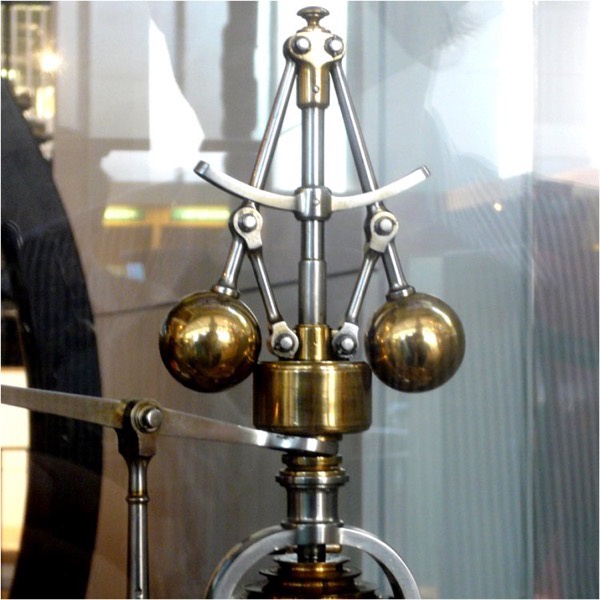
Those who might’ve noticed, or data-mined, there’s been a sudden removal of much postage around a single subject.  I’m not hoping to do an Andy Weir, but I was working on a book.  A book about a girl, a sentient motorcycle, and {something else}.  That there’s the problem, those stupid curly-braces, I haven’t a clue yet.  The various versions went through several different ways of exposing the world, plot, characters and none are making me happy. Essentially, I read a good book, a book that get’s what I think is the protagonist’s voice just perfect and that motivates me to pick up the pen …and then the ATP runs out, steam condenses, the flywheel slows, and the two spherical weights (brass balls, get it?) slowly descend as their spin slows.

Step 1: I need to look back on my reading list (not really, I know which titles and authors) and buy copies of these inspiring works.  Then keep re-reading them.

Phase B: I need to work out some more of the backstory.  Like, what’s this sentient motorcycle’s gig?  How would, for example, carrying our (human) hero’s butt around the world’s largest racetrack (look it up yerself; thank me later) somehow result in {something else}?

Part III: William Gibson—curse him with every earthly reward he desires including both of my kidneys—may’ve beat me to the punch on the {something else}.  Positing the “shed miracle” is hopeless.  The lone genius, laboring against neighborly doubt and ridicule, is bullshit.  Nothing happens in a vacuum.  No one works alone.  No one achieves greatness, we achieve greatness.  For one thing, great systems achieved today may have an elegant underpinning but the actual doo-dad is so complicated, the result of so much lifespan expended that no one person can do it alone.  No one person can even grasp the design.  Sure, the Great Leader (or “First Engineer”) has a leg-up on the others because she’s figured out both that “elegant underpinning” and how that scales-up to the doo-dad.  And because, in many cases, the elegant underpinning is not at all what you think it is, maybe even out-of-scope to the doo-dad, sometimes the Great Leader really is the only one who “get’s it.”  I’m looking at you, Bill Gates.  (Once again, look it up: it didn’t start where you think, he didn’t invent what you think, and his “big contributions” have nothing to do with computers.)

Conclusion:  I need some more research.  I need to test my hypothesis.  Whoa, I think I’ve just had a brainwave.  I may know who to contact.

categories:

  • “blogging”
  • “computers”
  • “life”
  • “ramblings” coverImage: “lost-keys-1.jpg”

Lost keys

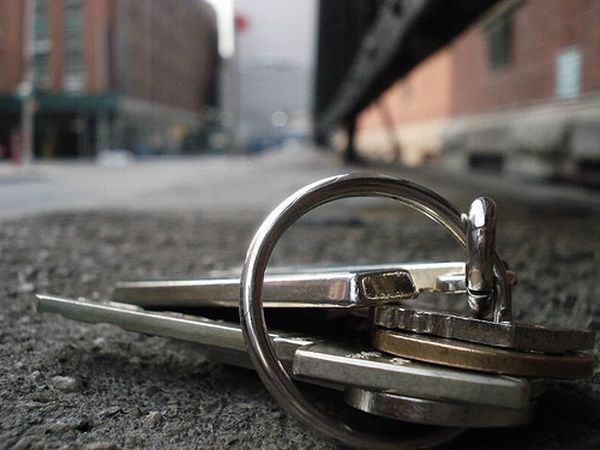
Greetings fair reader, in the preparation for a mildly risky adventure I was thinking about actually writing down a couple of passwords and letting my wonderful partner lock them up in her “safe.”  (A plastic box with a concrete lining, sawed through in under a minute, isn’t exactly safe.)  This violates a lot of practices, including lowering my overall security but I’ve come to realize there’s a lot of info I’d like her and my daughter to have the option to keep or toss.

Because if those keys are tossed, the info I’ve gathered is lost.  Like these letters alongside each other.  They’ll idle in Wordpress space for a while, gathering ever less traffic than they do currently—negative visits—and finally disappear when the stockholders of WP abandon it for a newer fad.

I don’t expect anything is permanent, my aging father would be proof even if I didn’t believe our sun is a main-sequence star.  As his dotage gathers steam, every visit highlights the tons, literally tons, of crap he’s hidden throughout that house over 46 years.  There might be gold, but like panning, it would be a lot of back-breaking labor for some really small flakes.  I, for one, would be happy to call in a 40 yd dumpster + everyone I can and say “Haul out what you want, dumpster or your car. Just haul it out of this house.”  My idea of an Estate Sale.

Side note: Was looking at pants in Goodwill yesterday and once again came across someone’s custom, tailored clothing.  This pair had the person’s name and the order number permanently labeled inside.  I got really sad, thinking how probably he’d died and these pants wandered there way from closet to box to Goodwill garage to sorting, cleaning, and the rack I was standing in.

Back to the “lost keys” and how so much potential would be lost with them.  It’s silly to think how much content I’ve generated that’s made it’s way through two dozen computers to this one under this desk, and how I vainly think my daughter might be the slightest bit interested in any of it.  She’s shown none in the files of her mom, who’s death is now a decade in the past; why am I special?  And one of my loving partner’s charms is her lack of sentiment.  She has some mementos, like rocks from places she’s visited.  She has more fascination for family photos than I but she’s not serious about keeping them.  But she’s very much like Ole Golly in “Harriet the Spy”: I only go forward, I never look back.

So the prospect of riding off an Ozarkian mountain road reminds me to at least give my closest loved ones the option of looking at all these mushy old posts or letting them fade to grey by themselves.

categories:

  • “life”
  • “ramblings”

Hospital time isn't real time. It flows at a pace you never master. When waiting with someone, it can be hard to understand that the patient's measure of it is different than yours. When the patient is your child, it's maddening. On the one hand, it is a marvel of modern society that a random person can manifest the symptoms of the weirdest deformity on a Saturday night and in just over 13 hours be under the knife to do something that will make it less bad. (Making anything “all better” is impossible since it depends on the mindless, life-long determination of the patient, and none of us are built for that.)

So I sit in the last hospital my brother and mother ever saw. The one my dad's had a knee replaced. My other brother had kidney stones remedied here. No, wait, here they weren't remedied, it took another hospital. This is the place that repaired my then-girlfriend's shattered elbow. I hate this place, I want to burn my clothes when I leave; not when I get home, when I walk out the door, walk naked to my car. But I recognize to my core that this—the helping of one to endure this “care”—is our 2nd highest calling. The first is to help our fellow human to die with as much comfort as possible at the time of their choosing. (No craziness here, we need to make education on that choice a top social priority.)

To boot, there are lousy food choices on a Sunday here. I mean, lousier than McDonald's, they've closed to be replaced by an ever-so-much-less-undesirable-PR vendor. (I have to admit, as my bro was dying from colon cancer here, the irony of the McD's was palpable.) So tired cranky and hungry. Perfect. Ok, I'm going to commandeer this couch and try for a nap. It'll make me run on hospital time for a while.

Edit: That surgery, a quickish fix, leads to over a year later undoing the temporary fix.  The hard way.  A surgery I think I had at 21 after the first try at 17 didn’t work.  All because the doctors never once mentioned that diet plays a rather large role in the health of your digestive system.  You’d think that even in the late 70’s, someone might know that.  Oh, wait, they did: they told me to drop dairy products.  Which turns out to be utter bullshit and was known as such even back then.  Be careful of single-sourced advice.

And since this post originally aired, I’ve been back to a buncha hospitals including my dad getting his knee replaced a second time. It took him 3 years of saying “Hey, there’s something wrong here” before they got to the threshold of “Well, ok, we’ll take another $20-50k off your hands and try again.”

And at every occasion, as I walk into whatever windowless waiting area with fish tanks, I think about how time has suddenly changed speed.


It's been 3 years...

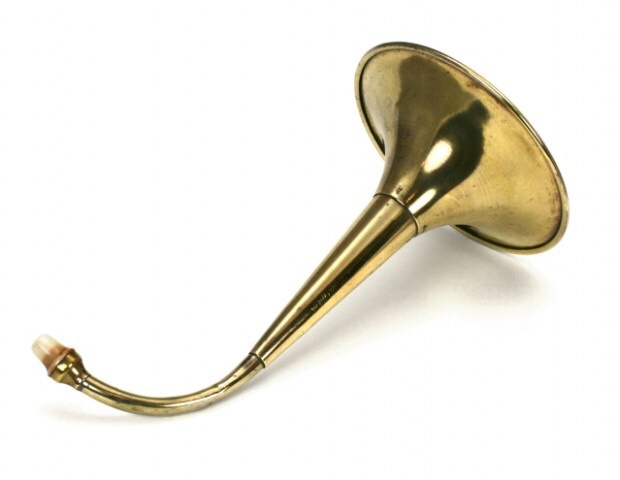
So the warranty on hearing aids is 3 years, and for very good reason: things get weird after that long. I'm getting a buncha issues that sound like crappy speakers or lousy power supplies. After ruling out physio changes (I had a small wire inserted in a bone in one ear, helped quite a bit) the conclusion was it's time for the usual $3k upgrade.

Now let me dispel a rumor: Health insurance advertises “we pay 80%.” First off, they only pay that to providers who've paid the enormous fee to become “providers.” This is a +a lot on prices. Second, in spite of no info in advance, they actually only pay 80% of the 2nd cheapest model. No amount of querying will reveal this before purchase commitment, and no amount of legal wrangling will change it after you've laid out some serious cash. They use a series of roadblocks, the last and insurmountable one is they told you when you agreed to the terms of service that they would never accurately predict what their payment would be in advance. Take that, and the clause that lets them unilaterally change the terms of the contract and poof. Trapped.

So by that route, given some basic requirements, I'd be on the hook for $6k and I might get about $1.6k back someday when insurance paid, well dear reader it was back to Costco.

Please do not construe this as any endorsement. When you buy hearing aids, what you're really buying is the tuner. The industry is entirely centered around the dispensers' profit, helping you hear is just a side effect. That means most places charge for tweaks after an arbitrary period (30-90 days or n-visits). Costco is free for the warranty period, as often as you like.

And since they're always pretty much fried by the end of their warranty, that solves that.

And so we melt our FSA accounts again.

One More Thing: hearing aids, at their best, sound like an old portable AM radio. You get stereo, ok, but it's tinny. This makes sense, hearing aids are all about small and long battery life. Low frequencies are a luxury, you need the highs to tell a “p” from a “b.” Thing is, I really miss bass. And it would enrich my life a lot to be able to hear the lows. Until I make my own. For now, turn your sources down, wear ear plugs, and treat ear infections seriously because there's no fix and aside from smell, it's you're only broadcast non-contact sense.


categories:

  • “art”
  • “blogging”
  • “life”
  • “ramblings”

Why rename, and why that name? The previous name was my username, which frankly was arrived at by pounding the keyboard after every thing I could think of was already in use. I guess that proves I'm just way more average than I thought.

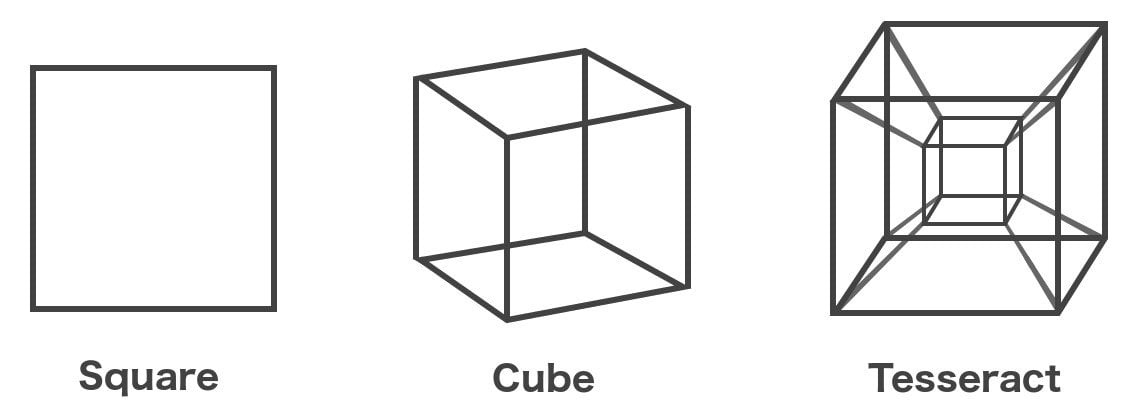
The idea of an attic in the basement comes from Robert Heinlein's* short story “And He Built a Crooked House.” (Amazing Science Fiction, Feb 1941) In the story, the architect builds a house of stacked cubes, in a 3D version of the flattened box in the shape of a cross. An earthquake happens, the house folds up and becomes a 4D cube called a tesseract.

Back in 1941 it was damned hard to envision a tesseract, describing it in words might actually have been the best method. Nowadays, some good visualizations are available. With any VR rig, it might be possible to really get the idea of moving through one. There was one as part of a mathematics visualization exhibit at a museum.

Anyway, the idea that you could enter the attic, 1 story above the street, from the basement, 1 story below the street, would be quite straightforward in a tesseract. And thus the name's inspiration.

Since we store a lot of cast-offs, old and unused stuff in our basements and attics, it seems to me a perfect model of my blog. And since the spatial model of the interwebs is just as wrong as the pipe-model, my choice of a tesseract**—an impossible form in 3D—doesn't seem THAT weird. Or it's a weird I like.

Anyway, so with a new name, I shall with a new effort be making. Computer upgrades have happened and accessibility has been increased. Looking forward to storing more of my weird thoughts inside your head.

*While this story isn’t nearly as problematic as others by Heinlein, I wish to acknowledge the man’s terrible contributions to literature and society.

**It might be argued that in a tesseract, the basement could actually be in the attic.


“life”

  • “ramblings”
  • “travel”

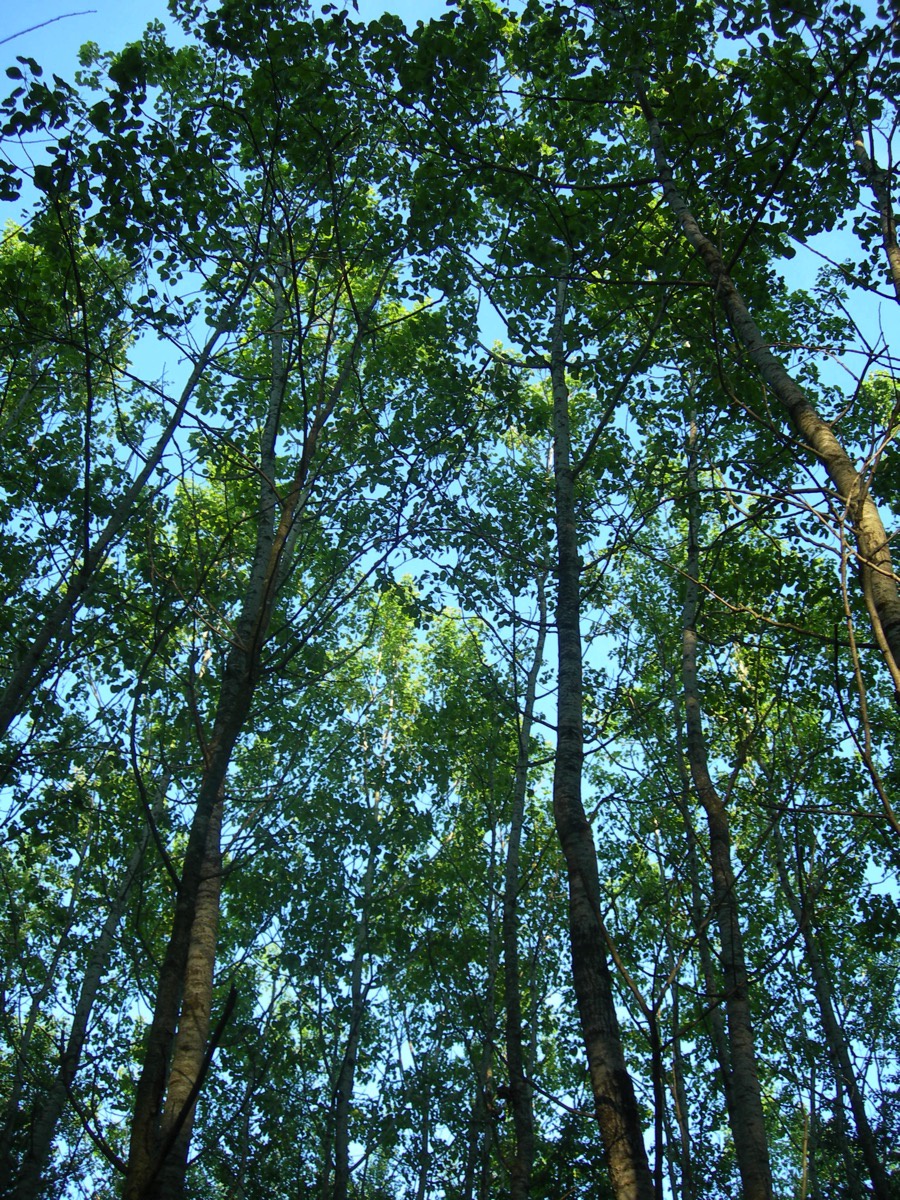
A bit rainy today, the end of the moto season draws close; it's hardly too cold, but there are wet leaves everywhere now and that's worse than ice in the spring. All in all, the “end of it all” tone of autumn is leaking though my Managed Optimism* and so I stumbled on the above photo and revisited my sadness at the loss of this forest.

These trees have been growing throughout my childhood. In my teen years of visiting my dad's fishing cabin, I never knew this forest existed. It wasn't until my 40's when my dad and his brother in law bought a beat up Ford 9N tractor with a badly maintained brush-cutter that I discovered this forest.

It's funny, as a midwestern boy, I'm longing for actual horizons. I'm surrounded by trees, hills, or buildings and getting to see even 10 miles is a treat. I feel taller. When a ride takes me out into the farm fields where the roads run straight forever, I'm not bored or sad or longing for the twists around the river valleys. Ok, those are fun. But I'm digging the sight of the sky vault.

So why this forest? It was a middle-aged stand of mostly birch trees. In Architecture school, these were the trees used because they're so platonic. Ok, they're not Platonic trees, they're hi-contrast super-easy to draw, nice for foreground and easy to pierce the frame.

Mixed in were a fair number of poplars, which even with my little remaining hearing, make the most wonderful popping sound in a breeze. Along the Rio Grande, near the Tamaya Resort & Spa our family friend Jerry helped the reservation restore the native poplars that were driven out by the salt cedars and Russian olives. Really ingenious trick, they engineered an herbicide dispenser that selectively killed the early sprouts of the invasive species, leaving the slower poplars a clear shot at the sky. (Never thought I'd hear someone call poplars “slow growing.”)

Anyway, fast forward to age 45 and I discovered this forest for real, thanks to S I guess. It was a brief couple of years enjoying it as a place of serenity, especially as my brother got sicker. And so did K (different rates, same fates.) Then, almost at the same time, my dad and the other owners sold a large fraction of the land to the state DNR, who in turn sold logging rights because whatever. Our side decided to tag along, as it would be almost pure profit, the state was bearing the costs of the roads to get in and extract.

The forest is gone. Not just gone, but shredded. The land is impassible with toppled stumps and ruts from the “minimal impact” machines being 4 to 6' deep. It looks like a WWI battlefield minus the organization and order. This is not a complaint against logging, though I think there's pretty damned fine business model for following these hacks around and chipping the leftovers, grading the land, seeding it with something. The sheer violence of their leftovers is staggering.

And now to accompany, my brother's dead; so's K; S and I are long over, cooled, and buried. And I've moved on, happily, to new happy-places with M, and her entirely different view of the world as a dynamic place. She lives in a series of pauses in which she gives all her attention. And she makes me smile, even now when she's at work and I'm feeling blue.

So I find serenity on rivers kayaking, or in making/doing things. Even on a bicycle, though I'm so out-of-shape I think all she can think of is “God, it sounds like he's dying.” (Yeah, a recumbent is easier on my wrists but it doesn't pedal itself.)

And still, there are moments when I miss that forest. Full of skeetos and gnats most of the summer, it's possible to hit an early fall day after the freeze or late spring with a frost at dawn, and it'll be warm and still enough to take off as much as you want and just hang out with the trees for a little while.

*Sounds so much better than “self deception.”


So in the imaginary world I travel through, I think I'll someday commit to writing sconce fiction. I had a writing prompt from Neal Stephenson's “Cryptonomicon.” In one scene the hero is headed to the Phillipine jungle following geo coordinates from an anonymous source. After a long drive on pretty awful roads past a lot of checkpoints of slightly dubious officialdom, he arrives at an unremarkable spot.  Middle of nowhere, nothing but jungle, laying right on the ground and covered only by decades of growth, lie two coffin-sized ingots of gold.  The point of the exercise was to show our hero just how mind-numbingly powerful the anonymous source was that he could give away the combination to the vault with full knowledge that our hero (and no one less powerful) could do nothing to exploit these riches.

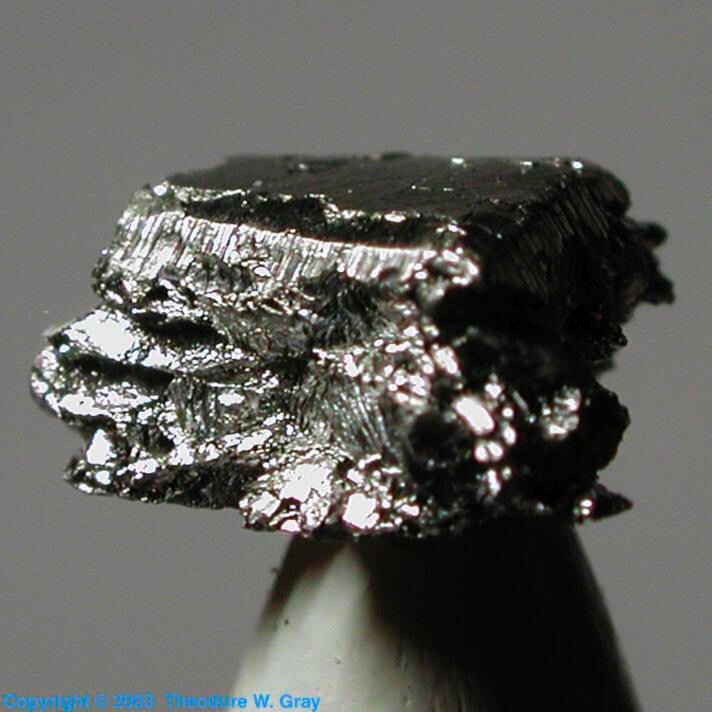
So I keep thinking of this idea of all powerful something within reach but utterly beyond grasp.  I like the big ingots of gold because they themselves resist all exploitation by simply being massive. The variation I keep toying with is you walk out to your back yard one morning and there's a car-sized lump of iridium.  The fun here is that the average person would have to go research just how valuable this find would be. (Very. Country-sized wealth.) The irony or the limiting factor on this is iridium is damn near the densest metal there is, so it will sink. And not exactly slowly. So our hero is left with the prospect of...well, really no prospects at all.  I'm pretty sure US citizens don't have their own mineral rights, and worse yet urban dwellers don't get the same land surface rights.  Finally, even if our unfortunate Joe kept the rights to this bounty, the giant corporations needed to exploit it would take the lion's share of the worth, and worse yet, leave him holding the bag for things like environmental mitigation.

I delight in the presentment of an utterly perplexing situation, the initial discovery of its surface characteristics (and resulting cartwheels), followed by the slow dawning of the real richness of the event (and hopefully, fullest enlightenment.)

I think the attraction lies with the way I figure out the world: initial observation (wtf?), first-order realization (wtfh?), and then at some remove, the final dawning of the full picture including my feelings and maybe what others felt (ahhh!).

It's all well and good, this Sherlock MacGyver stuff (hey, there's a new character idea) and we all delight in the title: ““rousing simplicity of the solution after 5 commercial breaks and before the end credits roll. But in reality, almost nothing ever yields to the first-order observation.  Certainly very few lasting solutions are created. Most often, that's a blundering sort of move that friends forgive the side effects of and strangers focus on using to hate. It's only a bit later that we figure it out.

And that's the fun of the scene from Cryptonomicon.

But me, I'm hung up on how to land a car-sized lump without destroying a decent portion of a large continent and killing all life on earth. Tricky.