The Basement in the Attic

My random meanderings on lived experiences & the thoughts they generate.


categories:

  • “art”
  • “computers”
  • “movies” tags:
  • “stars”

Greetings gentle reader, hope you’re well and enjoying rich experiences.  Last weekend I joined the fam at our local planetarium.  I’m guessing it was a typical 60-footer maybe seated 100?  Sloped floor, as is the fashion, overlapping LCD projectors with software to stitch the images together. It was neat-o.

But a few days later I realized that something’s lost in 40 years of technological improvement: black level.

In 1978, I was walking through the almost-opened addition to the Science Museum of Minnesota having ended my HS senior project in the exhibits department doing graphic arts tasks.  I decided to go into the offices of the as-yet unfinished Omnitheater and asked if they needed p/t employees. I happened to talk to the right person who pointed me to the right person and I was starting as a console operator for $5/show.

An Omnimax theater is an Imax projector inside a dome.  Revolutionarily for the time, the floor is sloped 23 degrees.  The projector and film format are centered around a 30mm fisheye, the Hasselblad 30, with it’s central axis lowered about a half-inch off center.  The projector version is substantially different mechanically since it doesn’t have moving elements or a diopter for exposure.  Oh, and it has to withstand the heat of a 12,000 watt arc-lamp shining through it.  That’s mostly accomplished by surrounding it with an enormous aluminum can and the film blocking most of the light.  The lens can survive only about ½ minute of “raw” light through it. Running without film is to be avoided.  Like the plague.

Now here’s the point: back in those days, Omnimax films were rare so it was thought that adding a planetarium would be a logical extension.  Makes sense, except for that 23 degree slope.  No conventional, earth-centric clockwork planetarium could handle that (at the time, though Minolta figured one out later.  Nope, we needed one that didn’t mechanically link all the projectors so a non-level “horizon” wouldn’t freak it out.

We needed the Spitz Space Transit System.  Don’t worry, we’re getting to black levels, actually faster than you think.  The STS consisted of a 4’ starball, 5 separate planet projectors in a row behind it, and some zoomable projectors for the special stuff.  Their names were evocative: Earth, Moon, and Sun.  (There was room for 1 more, SMM didn’t buy it.)  Off track: why only 5 planet projectors?  Because at any one time at any point in space, you can only see 5.  Space is big, very big.

Every projector in this selection featured something like this: an extremely high-precision light source.  Usually a xenon arc-lamp the bulb of which was used to illuminate microscopes and as headlights on tanks. (They were highly precise and stupidly solidly built.) Then there was some kind of aperture (movable in Sun, Earth, and Moon), lenses, and finally a mirror that could pan and tilt.  That’s it.  Darken the room, put any of these up, and you have a nearly infinite, velvety black with a single point of light on it.  Those mirrors were controlled by a Data General Nova 2 computer and it could move them around in ways that quickly fooled you into believing you were seeing 3d projection.  Partly, due to the aforementioned velvety blackness and the sharp, tiny, bright point of white.

But the starball was different.  It was a black aluminum sphere with protrusions that made it look like the most sci-fi sea-mine you could ever imagine.  In fact, it would’ve made a perfect model for the Death Star.  The smallest cylinders were little more that holes in the shell, with a tiny lens. (Smallest stars) The god progressively more complex until some of the towers were 6” tall with periscopic mirrors on top.  In order to get all 10,000 stars in the right places, sizes, and colors, sometimes the light had to be bounced along the surface to get to ANOTHER post with a mirror that “threw” it to the dome.  I’m telling you, it was the most magnificent thing you’ll ever see.  Inside, each hemisphere had one of those durable arc lamps off near the “pole” that bounced the light out, towards the inner shell where a mirror bounced it back down to the dead center of the hemisphere.  In the middle of a dozen miles of razor-blade foil that was blackened like guns are, coiled in a spiral, sat a hemispherical mirror that bounced the light out to all those openings, and out to the dome.  The razor-blade coil was an ingenious solution to absorbing every stray photon from that xenon lamp.  With the sharp-edges up, endlessly spiraling in towards the mirror, it made countless tiny valleys of black metal that absorbed the light or if it DID reflect, it did so in ever diminishing angles of the valley walls.  It really worked too, the hemispherical mirror looked a drop of mercury on the blackest plate ever made.  And like the planet projectors, this giant ball could roll, pitch, and yaw from the computer’s control.

Ok, ready?  You’ve got an idea, infinite black space with 5 dots swirling around?  Now let’s fade up the stars.  10,000 of them.  Every star visible from earth’s orbit.  Down to some ridiculous magnitude, “firefly butt at 100 miles” I don’t recall.  Sure, a lot of the faintest ones—those stubby cylinders—were “fillers.”  But holy moly, the first time you saw that thing, you had trouble breathing.  Astronauts and astronomers would gasp and grin.  Radiologists (who regularly use the most amazing monitors in the world) would do a double take.  Photographers and cinematographers would quit their jobs.  Just imagine the Milky Way, a zillion specks of light.  Not one twinkle, either, every single point was sharp enough to go through the backs of your eyeballs.  Majestically turning.  Or, because we were teenagers, violently tumbling when we there wasn’t an audience.  Absolute black, right next to absolute white.  Each point, from a theater seat, literally infinite.  Sure, up close, they were circles, but the audience never got to see that.  Heck, even employees were smart enough to stay in their seats when it was “just stars” because the room was absolutely dark.  No exit signs.  We console operators even knew when these parts were coming up and would dim the console lights down to nearly nothing (if the computer was still running; if it was manual, then forget it, we needed 3 hands and a lot of practice.)

The STS was magnificent, but it was a one-trick pony.  It was only ever just a planetarium.  It was an electro-mechanical analog-digital display system three stories tall and costing north of a million bucks (1978 money folks). It was flaky as hell, in fact, it couldn’t actually DO a planetarium show when I started, the DG computer couldn’t run +2 planets and the starball at the same time.  It would be my brother, hired as the night-shift technician for Spitz, who spent a year working on it, that finally got it working.  I saw it exactly ONCE do “the real deal” showing a the inner planets in orbit around the sun as our imaginary spaceship slowly climbed out of the ecliptic.  Ok, practically speaking, such a ship would’ve been traveling a HUGE % of the speed of light to see that view, and the noise of all those stepper motors was really loud.  But it worked.  My brother went on to write and run the Christmas star show with a University professor, but I was off to another Omnimax theater by then and never saw it.

Now, back to 2022, comfy seats, the usual mellow-colored cove-lighting starts to fade, our presenter introduces herself and her console operator, we get to a dimness that I thought was the last pre-show lighting…and up comes the stars.  My eyes are 40 years older, I wear glasses full time now, and I’m moderately sure I could’ve walked out of a theater I’d only seen for less than a minute before the lights went down.  The stars were…well, they had color (I couldn’t see it), and they could move any which way at any whim.  But it was never dark.  I think it got down to “rural Minnesota” dark.  Not Antarctica or Sahara, or Mt. Everest dark, but something where, say, one street light might be within site (11 miles).  Dark, certainly darker than any kid in that room had ever been in.  But as I watched the stars and constellation figures move and fade in and out, I realized later it wasn’t earth-orbit dark.  Reliable computers with powerful graphics cards and good software achieved something the Space Transit System could never do: they could show the stars, or Omnimax movies with equal ease.  In fact, you could watch any movie you’d want on that dome: the software can present it such that all perpendicular lines will be square, stretching and distorting the image so the curve of the dome “undoes” that to make it look straight.  You could even MOVE the movie’s window anywhere on the dome, that calculated distortion along with the perfect stitching algorithm making it look good anywhere inside the room.  Or you could project a panorama from Mars in scale such that the audience is as close to the real thing as they’ll ever get.

But what it cannot do at all, not one little bit, is show you the truly infinite.  To see the stars as only 12 men have seen it, in high orbit and lunar transit.  The STS systems were a fucking nightmare of mechanical engineering, keeping them running was a job that still keeps me in awe of my brother.  Just the number of anti-backlash gears—each needing clean and lube and careful tensioning—makes my motorcycle look like a single lego block.  (And every axis of movement for every mirror had at leas 1 pair of those gears.)

Even from 40 years away, the sight of those stars is still burned into the back of my eyeballs.


categories:

  • “computers”
  • “life”

The title isn’t misleading nor are the tags.  Hearing aids don’t exactly help you hear.  And modern ones are all about computers.  The best hearing aids in their best moments are almost a super power.  But the vast majority of moments are spent figuring them out or working around their limitations.

The Computers: A hearing aid is a monolithic integrated circuit with power, mic, and speaker lines.  Oh, and a button or two.  My current tuner who’s my age, worked back in the day when her shop had tools to repair them.  She told me of the days when tuning was a jeweler’s screwdriver and a single adjustable potentiometer.  Nowadays, it’s all mouse-clicks.  And some ridiculously expensive devices to produce insanely predictable sounds and listen to what you're hearing.  It’s weirdly comfortable-stimulating to get that incredibly thin tube tucked alongside your new hearing aid for this test.  The funnest part, though, is listening to the calibration “tape”: it’s a woman who must speak +6 languages.  They gave her a script of words, then edited out all the vowels.  I recognize sounds that seem pretty likely German, Hebrew, and plain ol’ English.  Oh, and French.  It’s pretty likely the same woman, her pitch, tone, and modulation are so uniform.  I’d love to believe she was paid a fortune as befits those skills, but it’s possible they simply bought some translator time at $4/hr or whatever horrible pittance those folks are paid.  (Sister-in-law has done this, and it’s even worse than you think: She competed against herself as multiple companies bid out her skills.)

Super Powers: I remember long-ago, maybe my 1st or 2nd pair (they only “last” the 3 years of their warranty) and it was after a recent tuning, that I went hunting with my dad.  My daughter had always been fascinated with what the dogs did, the process, etc.  So my dad took us out to a farm where his dogs are trained and they let loose some pheasants they raise for this purpose.  Let me remind that pheasants are an invasive species here in North America, introduced by ye olde white men for the sport of killing.  I will admit, they are beautiful birds, but they no more belong here than I do.  It was a cool fall day in a field of stubble, my dad was armed as I don’t even shoot things let alone critters.  We walked along, the dog was doing her thing in Olympic perfection, the occasional bird was blasted.  And the hearing aids simply eliminated the noise.  Perfectly.  Like some kind of magical, high-tech hearing protection.  (Which, in fact, they’re supposed to be, but more on that later.)

Working Around Their Limitations:  Keep that fall day’s wonder at their perfection in mind.  Now bring back the computer stuff.  Hearing aids have a lot of software and electrical engineering (analog behavior) to amplify sounds.  All that complexity can get confused.  Let’s start with loud stuff and protection.  The hunting story was a unique time and event, I’ve never found any hearing aid to seem that protective of obviously dangerous sound levels again.  Some of it I understand: if the sound persists, the software begins to think it’s normal, and starts to let it through.  Makes sense, one of the problems with old-school audio compressors is they’re not very smart, they can face out or fight a long, sustained note. Gotcha.  But when my probably-failing air-compressor roars on, they might kill the volume for an instant, but pretty rapidly, they’ll start to play it through.  And it gets worse: the software will notice a high-frequency component to the sound, decide that’s consonants, and mix it louder!

Pause for background: Hearing aids are medical devices.  Not like glasses, but like pacemakers.  That means that they are rigidly regulated to never cause harm.  They have a limit called “Maximum power output” (MPO) which is enforced both by software AND careful electrical engineering of the power-consumption.  So even if the software says “boost the shit out of this signal” the amplifier will find there’s not enough available power to do it.  That analog compression or fading of the signal is rare in digital hearing aids, but I think I’ve heard it happen in rare conditions.  Each hearing aid and every tuning has a different magic circumstance like that, but once I find it on these new ones, I’ll let you know.  So MPO is a hard limit.  The hearing aid will literally fail, perhaps even permanently, if it tried to cross that.

Nonetheless, I can setup any number of situations in which my eardrums are clearly being driven to painful “flapping”.  So maybe technically the little MPO-accountant sez it’s not too loud, but practically speaking, we’re way past “holy shit.”  More Background: I worked with giant sound systems.  I’ve listened to sound pressure levels that are illegal.  Played “Walk on the Wild Side” so loud that the bass notes were literally moving the cuffs of my pants.  Standard Warning: don’t do as I did, folks.  That’s why I wear these things.  But would I do it again? Fuck yes.  I love music.

Back on Track: Figuring Hearing Aids Out.  The vast majority of notable events (see my confirmation bias there?) in hearing aid use is figuring out WTF they’re doing at that moment.  Ambient sounds or streaming music will suddenly do a 3s fade down 6dB. (That’s a lot.)  Or all the mid-range will fade out.  Or the high-frequencies will pretty abruptly drop off.  Then {whatever} will slowly unhappen.  Fans can be trippy.  A slow-moving ceiling fan can cause air-movement over the mics that gets perceived as infra- or hyper-sonic energy.  Remember the MPO? Well, if the total environmental acoustic energy—including stuff you can’t hear—gets high, then time to fade down the audio.  Even if it’s a signal you can’t hear.

I’ve had the benefit of working with some great tuners.  And some well-meaning ones.  The latter group have their benefits: they’ll generally wave off my requests with some platitudes but in so doing they’ll reveal the hidden limitations of the tuning-ware.  Yes, I acknowledge that those folks will mostly be revealing the weakness in their computer-skills or training in the software (which is usually new to them, in their defense.)  The great tuners actually try their product.. I don’t know if they try them enough to hear what I’m talking about.  My wife has made it pretty clear that I hear stuff most people don’t.  (Even in my current state, I do a Radar O’Reilly on sirens and mechanical noises.)  So maybe they don’t get the full experience of WTF.

Let me give you a recent one.  Go listen to “time machine” by Fousheé.  There’s a (mono?) mixed rhythm guitar.  Very mid-range.  This thing plays from my speakers and it totally kills all 3d spatial perception.  The guitar drags the rest of the mix right inside my fucking head.  Please relax, I have quite a bit of experience with spatial sound systems.  I don’t own one.  And I know what 5 or 10 degrees of phasing will do.  This is the exact opposite: it drags everything to a psychoacoustic point inside my skull.  It’s at once very cool and very disorienting.  And it’s novel.  Hearing aids in general have terrible direction-finding.  Like multifocal lenses making (some) new wearers trip down stairs.  Got that, handled it.  This is radically different.  Instant LSD trip.  And very concerning, because what happens if I’m driving a car?  I think I’ll ask that wonderful partner of mine to drive someplace and play this song.  See what happens.  I wish I had my old Focus SVT, I’d love to mess with the sound-imaging features of that stereo and this song.

Wrapping it up: What DO Hearing Aids Make You Hear?  If it wasn’t obvious, they make you hear them.  All the time.  Not the sounds around you, the sounds they feed you.  When I resumed wearing glasses full time 20 years ago, I was aware of the absence of the frames when I went to bed at night.  Instead of a bright-spot after a flash, it was like a dark-spot that’s never there.  Hearing aids aren’t the frame, they’re the whole scene.  I’m constantly inventorying “What can’t I hear right now?” And at the same time going “Why the fuck is everything so damned loud?”  Why does crinkling plastic make any noise at all, let alone so very much of it?  Plumbing, how the hell do you normals tolerate the incredifuckingawful sounds toilets and faucets make?  (I hate aerators so bad I can’t tell you.)  And with the new hearing aids, when did our aging Prius become a goddamned Bentley? What happened to the clatter-rattle-sqeak our 60k mile dashboard was beginning to make?

See what I mean?  Hearing aids don’t make anything easier.  They make the mechanical work of hearing some noises—maybe even speech—easier, but they make the cognitive load of listening much, much harder.  Sure beats the constant ringing I’d have to listen to without them, so I guess I’ll keep on using them.


categories:

  • “life”
  • “ramblings”

Life with a new phone: Separating work from everything else.

New employers readily provided a phone when I realized that legal records hold could probably not be predictably limited.  That is, no matter how good the InTune sandboxing is, some demand could possibly creep out to include other stuff.  So now I carry 2 phones.  Naturally, I chose a mostly unfamiliar User eXperience to insure I knew I was on the work phone.  And oh boy, is the UX different.

Volume Controls: Three layers deep and counting.

I’m assuming the fruit company patented their context-sensitive volume knobs.  Either that or wow, never underestimate the poser of contrarian-ness because damn.  The volume control is buried 3 levels down, I have yet to get the buttons on the side to do anything effective.  Ok, no, not true, today after pairing BlueTooth headphones and actually streaming music for the 1st time, I did get the volume buttons to do something, I’m just not sure what.

If you want to quiet the phone before a meeting?  There (must be) an application for that.  Want to turn up one of the 7 possible sliders on the Volume control panel? There (might be) an application for that.  Want to simply shut the phone+vibrator up completely? Turn it off.  Or (perhaps) there’s an application for that.

Notifications: in Google ville, 1 is the new Zero.

How about badges on icons?  Got em.  In fact, can’t get rid of them.  Sure, you can login, then swipe up to leave the first page, then swipe right to get the next page after the one after the first page, then click Settings, then click Notifications, then click to get to the per-application on-off switch and kill them forever for that application for all purposes.  Or just live with the fact that Outlook, Teams, and my identity-application will now forever be emblazoned with a little red circle sporting a number>1.

And let’s ponder that application store, shall we?  ”You will never find a more wretched hive of scum and villainy.”  Every application has ads, sells my info to anyone, and …wait a sec, here’s a volume control that claims no ads and open source…but it hasn’t been updated in 2 years.  Well, ok, putting my apples in this basket.  But wait, look, my employers have provided some kind of special application store in their private space of the phone.  Nope, just Microsoft office.  Not even the myriad of applications required to administer my benefits.

As mentioned here: https://components.one/posts/the-new-pornographers-tech-reviews there’s been decades of positive-only reviews in tech that have lead to our current situation.  The totally privatized walled garden from the fruit computers, and the pseudo-libertarian nightmare from the little green robot.  While my PinePhone works after a fashion, it’s a long way from ready for anything.  Sailfish runs on 10 year old products never sold on this side of the pond.  Oh let’s just stop there, too many other sad stories from this side of the compiled-language/packet-switched divide.

Oh yeah, chopping up AT&T was SUCH a smart move.

Addendum:

“What matters is that the potentiation of will is the only meaningful criterion against which tools can be evaluated.” (p. 24)  I’m pretty confident my thoughts stand in good stead in light of data.

categories:

  • “life”
  • “ramblings”

I-35W over the Mississippi at Minneapolis; the version, precollapse.

Last night, the Forbes Avenue bridge over Frick Park collapsed.  I’m not going to cite anymore facts than that because, as On the Media podcast teaches us, everything we know now will be wrong in a week.  And everything we know a week from now will be contradicted in a month…and so on.

I want to talk about the after-effects for just one person from another bridge collapse. And the broader impact of choosing not to care to save money.  In August ’07, the I-35w bridge over the Mississippi River (Minneapolis) collapsed.  There was a design feature that aged poorly, and a unusual static-load of parked equipment from the day’s work on resurfacing.  I even commented on this to my girlfriend at the time we drove over it.  We totally missed it, we were safely at home when her sister called asking if she was ok. We tuned in to news and it was a very distant thing, at the time.  No big impact, didn’t even really hit me how big the mess was.  About the only thing I noticed right away was having to find new routes to St. Paul.

Slow-forward through years that took me to driving UNDER the construction a few hundred times, as well as finally crossing the new bridge 2 days after opening.  Interesting side note: that route under the bridge took me under several other bridges: 46th, Lake, the old RR bridge, Franklin, I-94, and 10th ave.  I watched the entire resurfacing of Franklin and 10th from below.

Present day, and my heart aches for the folks in Pittsburgh who are going to wake up someday soon and realize that bridges aren’t permanent.  Given our neoliberal austerity, they’re not even reliable anymore.  And this is pretty traumatic over time.

There are 2 models of durability.  I’m paraphrasing  either Dr. Jonathon Miller (The Body in Question) or James Burke (Connections) here when explaining.  There’s the “statue” and the “fountain.”

You can make something last by picking extremely durable materials and performing a LOT of work on them.  “Work” here means the chopping, chiseling, grinding, etc but it also includes the making of axes, chisels, grinders, etc.  And work in the physics sense, force over distance consuming energy to do it.  The result is a solid, usually heavy thing that you plop down and let birds poop on it.  It’s there for as long as it remains, though choosing the wrong materials not anticipating future environmental changes could mean acid rain washes the hero’s face off a lot sooner than expected.

The other option is ephemeral, you design a system that continually remakes itself.  This is called “the fountain” confusingly because most of us think of fountains as all the structural bits, cherubs peeing, dolphins dolphinning, Poseidon or Aquaman or whoever lounging.  All heavily in the “statue” model of durability.  No, for this model, think of the founaining itself.  The prancing fluids.  Constantly renewed, turn off the water and they’re instantly gone.  In this model of durability, we spend much less energy up-front making the thing in exchange for a low energy bill that goes on for a veerrry long time.  Interesting side note: that looong, low consumption of energy can readily total far more than used in the statue model.

Buildings, roads, and bridges use the statue model.  Humans, mayflies, and laser beams use the fountain model.

But here’s the rub: in the original quote, the author used “permanence” instead of durability.  I’ve dropped this because over any unknown timescale, nothing is permanent.  (Mention the oxymoron at your peril.)  Entropy never sleeps, everything needs maintenance.  True, it may not need much maintenance, going decades between cleanings, repaintings, or repairs.  But never skimping on inspection, because schedules assume climate and environmental wear and that bridge planner had no idea what climate change would become, or even how 40-series radials under 1.5 ton cars behave differently from 70-series bias-plies under +2 ton cars.

And so we return to my previous political-economic dig at the reactionaries.  By continually cutting budgets as a straw-man for shrinking government, inspectors became charged not with inspecting but with guessing how long they could postpone inspections before something bad would happen.  Linear progression of corrosion, advances in cracks, perhaps even deformation of gussets (I-35w failure) were all accounted for on paper, then spreadsheets, then computer models, and ever-longer intervals to ever-weaker inspections were made.  Until the unintended consequence of all those consequences adds up non-linearly.  Then something goes boom.

I worked for 7 years in sight of 2 bridges upstream of the I-35w crossing, and watched them undergo the harrowing job of inspection.  I have to think Minnesota’s now at about peak inspection, having gone hog-wild-but-probably-ineffective for a few years after I-35w collapsed.  We’re now in the golden age where we’re still seriously committed, using novel science to its fullest, and generally avoiding the idiocy of budget cutters.  Pennsylvania has entered the panic ass-covering stage.  If you drive one of those amazing boom trucks, you’re going to make 5 years of overtime while electeds insist on their butts being thoroughly insulated by paper and signatures.  You’ll settle down to MN’s current level in a while, then cruise for a period while voting citizens still remember where they were when Forbes Ave crashed.

But MN will soon, and PA less than 15 years later, re-enter the phase of “Harrumph, why are we spending all this money inspecting bridges?”  Note I said “inspecting.”  No one would be foolish enough to question maintenance, noooo.  But inspections?  “Surely science has advanced since then?” Begins the slow trickle of eroding austerity-trons and within a decade, we’ll be back to waiting for that non-linear bit of unanticipated consequences to announce itself with another boom.

What we need, until we can show austerity for the naked conversion of public funds to private wealth that it really is, is a grayer definition of “durability” or even “permanence.”  We need to understand that “build it and forget it” doesn’t even happen to space probes.  “Caring for” shouldn’t be seen as a cost to be cut but as an investment that pays off.

Let’s point out to the reactionatries that using budget-cutting as a stand-in for the really hard work of actually shrinking government is a fool’s game.  Like the debt ceiling bullshit, it’s a paucity of thought being fobbed off on the proletariat.  Sloganeering.  Attach a pittance of returned taxes, and the lie of trickle-down, and it’s such a lazy sell that it’ll be hard to replace.

But when bridges start falling down, it’s time to do the hard work of recovering trust in the floor under your feet and replacing a route over an obstacle.


categories:

  • “life”
  • “ramblings”

Tis the season, the return of glare. As the sun’s arc lowers/moves south, it returns to shining in my eyes at the home office.  This is a mixed thing because that means winter’s on the way.  It is both a marvel and curse that just outside this window will be temperatures approaching 100F and -20F.  We can’t all be Cuernavaca, MX with an annual temp range of 60-80F, K oppen-Geiger=Cwb. Except for volcanic and seismic activity...

Anyway, I’m also lucky to have trees shading the yard.  Their leaves will soon fall, so I get better solar warming in the winter even though video calls get a little problematic.  First world problems, amIright?  We’re entertaining adding a tree to our back yard.  I whined initially about it cutting our play-space but the granddaughters are showing remarkable lack of interest in anything outdoors.  Now I’m swinging to Shiny Wife’s PoV and adding a tree would be some good shade.

Naturally, if I’m going to do something, I’m going extreme.  I’d love to plant one of the hybrid American Chestnuts even though it would be making messes all over the yard.  I read a delightful scifi book that used trees as a storytelling device and the extinction of the American Chestnut is really sad.  Naturally it was artificial, we introduced the Asian variant along with its pathogenic fungus and killed off one of the reasons European colonization succeeded.  The variety of sustenance that tree gave First Peoples and white colonizers cannot be understated.

But of course, the new American Chestnut hybrid is a GMO. We’ve borrowed an ability to metabolize oxalic acid from wheat and presto: a replacement for the most important plant in our history.  But oh noes, GMOs can’t be good because science is always bad in those movies and stories.  Hubris, we have it.  And so there’s a fight at the USFDA to classify the new tree as safe for peasants to plant.  Which of course has attracted well-funded reactionary organizations to …react.  And so, who knows.  Will it languish?  Could we visit the campuses and test plots where the new ones are growing and collect the nuts for …purposes?  Say, roasting?  Oops, that one fell out of the pan.  Oops.

Anyway, enough speculation, it’s autumn and I’m digging the ever-longer period of time when I can’t vid-conference because the sun is shining its gifts on me.

categories:

  • “motorcycling”
  • “ramblings” tags:
  • “apricity”
  • “thenextride”
  • “tranquility”

3 years ago, I donated my battered motorcycle Tranquility to a local mechanics’ school and bought something with 50% more moving parts and +30 hp.  It came with a 200lb weight increase, but if one is “prompt” with the throttle, the power makes that disappear.  No, really, Apricity is 3 different motorcycles.  From 0-2mph it’s an Elefant.  Below 4k rpm it’s a pretty sedate ride.  Perky, believe it or not, but not stressful around town.  Above 4k rpm, however, it’s savage.  I mean oh-my-god what-happened-to-my-bike and -eyeballs levels of violence.  If it seems to lose that +200lb penalty once rolling, above 4k it loses another 600lbs because it just slices.  All I can say is “thank goodness for gyroscopic traction control.”

And now, after 3 years of work on it, fixing what the dealer with factory support couldn’t, I’m thinking of going back.  My 4 bike history has been a constant increase in power, weight, complexity, and modernity.  Now I’m going back, from a 5 yo to a 12 yo.  All because of my knees.

Well, that’s the narrative that’s brought us this far.  And will take me 3 hrs WSW of here to see if their claim “We take all trades” includes a Lemon Law bike.  Yes, I’m pretty dang certain the original problem’s fixed.  I even have a theory why the dealer+mfr wouldn’t fix it and ran out the clock on the warranty.  But proof?  The only way to know I’m right is to wait X years and see if the digital throttle accidentally disconnects mid-ride.  Or on start-up. (Did that only once, slightly less surprising that going from 70 to 35mph.) Passive detection without a solid root-cause sucks.  Also, my fix erased all traces of the most likely category of cause by simply replacing all the wiring to the throttle.  “Simply” is relative, my family, the factory, and perhaps you dear reader might think that’s an understatement.  And before I had the spare wires in my hand, I did too.  But careful study revealed that with patience and care, no special skills or tools were needed beyond a continuity tester.

And that leads me to pondering something else…what if that 30hp loss was only optional?  Turns out, it occurs simply because of software commanding it not to be there.  A sibling model of the one I’m interested in has the same power as Apricity and still without that 200lbs.  Already the little wheels are spinning, how can I command the software to release the kraken?  Or do I buy a junkyard brain with said features released and fully or partially swap it?  Will some of the luxo features I’ve come to love (cruise control is an opiate) leave with that swap?  Or are there more software hacks to engage them on the swapped brain?  And what about features unique to the unleashed model, can those co-exist with things like warm hands and buns, a windshield that tilts up and down, and a lesser form of traction control? Gyroless, it simply unthrottles rear wheel spin and front wheel rise.

All these things are meandering through this narrative manufacture.  So too the worry that I’m just bored with Apricity now that I’ve likely triumphed over the manufacturer’s cheapness.  My aching left knee says otherwise, and a recent ride with a trike-pilot pointed out to me that while 3 wheels are in my future, I still really like riding on 2.  There will come a point where my knee(s) will fail, probably when a bad stop causes me to do the sloooooooowwwwww drop, where youthful enthusiasm makes me think I can stop it and 22k days of knee-wear demonstrates that I can’t. As the Car Talk boys used to say, the cheapest car you’ll own is the one you have right now.  Goodness knows, I’ve stabilized the costs on this bike, why push my luck?

Well, for one reason, that’s the basis of motorcycling at high latitudes.

Addendum, 1 day later:

I was riding home from work, and without significant prompting, perhaps a pause in thinking about successfully trading to this new/older lighter motorcycle, I contemplated Apricity and her virtues and was totally at peace with not changing.  Apricity is so young, I could do nothing but change fluids, tires, and pads until the valve-seat wear gets bad enough to break something, then donate it to that same mechanics’ school.  Sell my gear on ebay and never look back.  Already I’m wimping out because of the “cold.” (Rides have been mid-40’s F.  I’ve regularly ridden in the past at temps below 10F.  Not this year.)  So maybe I get better on picking my stopping-spots so I don’t have to strain my knees.  Maybe a brace? (Will Aerostich mod my suit to accommodate it?)

The main thing was, peace was reached.  Homeostasis was perceived as acceptable.  And so now I may just not bother with the 3 hour ride tomorrow to challenge the dealer to a trade-duel.  Or -dual.

Addendum, 2 days later.

Got up, got suited, in giving the moto a pre-ride inspection I realized the front tire’s near end of life but especially the front brake pads were worn and looked asymmetrically worn.  As best I could tell, it looked like an outboard pad was worn more toward the up-rotation edge.  That got me out of the suit and into my padded jeans to disassemble the calipers, clean them, and really look at the pads.  They actually have decent life left, though the outboard pad is indeed worn more than the inboard, it’s at least parallel.  Swapped pad locations, reassembled and ready for local rides like tomorrow’s commute to work.  I’ve decided that while this trade would be nifty, I’m mainly doing it because this bike’s challenge—the throttle—has been solved.  I beat the manufacturer and fixed it where they couldn’t.  So I was looking for a new challenge.  The -200lbs would be nice, but at the expense of all the widgets and doo-dads I’d have to add.  And that’s just foolishness, as I have this bike more than far enough along to make it pretty dang spiffy.  I may return the new brake pads I just bought, though the 30% cost of urgent shipping would be doubly wasted.  I’ll just sit on them until these pads go through their wear indicators.  It’s a fine rocket ship of a ride, and a new one would be fun too.  Best of all worlds would be to buy it and have 2 to choose from.  (And hack the +30hp back into it.)  But I have a strict “one butt, one bike” rule.

Conclusion: not this time, thanks opportunity.


categories:

  • “life”
  • “ramblings”

Today, I donated this bike to a local shop that trains kids to be bike mechanics and provides free/discounted bikes to kids who need them.  A damned good fate for a 40 year old bike.  But this bicycle has stories to tell, and I want to share them.

This bicycle belonged to a wonderful person named Kate.  Under the tutelage of serious rider friend Scott, she went to a bike store in Chicago to buy this one.  Hand-welded in Wisconsin by a then little known but up and coming brand named Trek, it was most notably the first bike that ever fit her 6’ frame.

Kate and I were married shortly thereafter, and though she was never much of a rider, it got some occasional use.  Mostly, it moved with us through the 4 address-changes before the first (and only for us together) house.  Then our daughter was born, and it sported a handle-bar mounted seat, a trailer, and a rear seat at one time or another.

One famous ride was taking my daughter to day care in the rain.  I draped my poncho over her in the rear seat, completely sheltering her from the rain.  Up until the instant I had to pick her up, thence dumping every accumulated drop into the seat’s bucket and soaking her to the point of using up a complete change of clothing at day care.  My daughter and I laughed crazily the whole time. One of many good rides.  This bike was also the ride where we invented bike polo.  It was fun and physics, kicking the ball to or away from each other while rolling.  Eventually, in 95, I used my severance pay to buy a recumbent and this bike began it’s long rest.

Not without it’s biggest adventure, getting stolen from our apartment’s garage in Oak Park.  Just a few days later, one of the forensics officers who originally responded happened to see a bike in the park out of the corner of his eye.  Electrical tape had been wrapped around the majority of the main bars, but this officer must’ve been enough of a bike fan to know what it was.  In what we now recognize as a form of harassment, he talked the kids out of the bike and returned it to us.  It enjoyed rare use by owner, daughter, and myself, while being moved to another 6 addresses.

It has survived its owner by 12 years, I’ve kept it in tribute and love. But realistically, it’s like one of those collector toys from the Pixar movie.  It’s meant to be RIDDEN, to aid in people acquiring experiences and enjoying adventures.  With even vague care it could survive for decades of use.  I don’t care if it ends up painted some obtuse shade, fixie’d, and carrying some white hipster’s man-bun around Uptown.  I just want to spend my days now remembering the adventures it’s had and contemplating all the places it will be in the future.

Take a moment to appreciate your bicycle.  Take it out for a ride and say “Kate” to the wind for me.  I’m going to go do that right now.

categories:

  • “life”
  • “moolah”
  • “politics”
  • “ramblings”

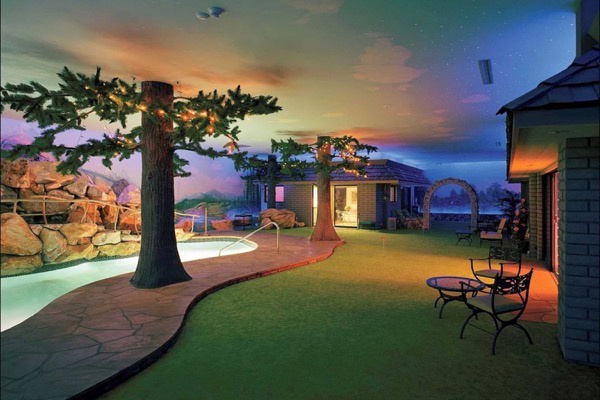
Architectural review outrage bunkers stephan m laforge 1 1536x1024

On Twitter, the amazing @mcmansionhell wrote a fabulous piece about bunkering in Architectural Review.  She wisely points out the shortcoming of living underground is that “...we humans require things from above ground to live.”  I want to stress that I completely agree.  In fact, once cut off from surface life, we suddenly have to replace a lot of services with tech solutions. Light, air & water filtration, etc.  And those tech solutions each have their own long tails that all get cutoff when the door slams shut.  Imagine some cascade failure due to running out of a lube oil that’s no longer made in the post apocalypse.

But I’d like to illustrate there is an even earlier failure than loss of surface services.  It’s the profound conceptual error that is easy for modern, especially wealthy, people to be completely unaware of.  It’s too easy to illustrate with Mrs. Howell’s quote about beets coming in cans, “Oh please don’t be silly.  I’ve seen them in their natural habitat, a Super Market.”  (Ep 71 “Pass the Vegetables, Please.”)

The failure I’m talking about is the inability to realize that survival is a process, not an event.  In fact, it’s a general event-bias fallacy, that many or most things have a boundary.  The fact is that a building isn’t a thing, it’s a process.  A person isn’t a being, it’s a work-in-progress.

Some of that bias comes from “progress” frequently equated with improvement or advancement.  So while from ages 10-30 one might see aging as progress, from 60-80 it’s seen as degeneration.  But thermodynamics tells us it really isn’t.  The 80 year old represents 80 years of entropy-fighting.  Sure, their health isn’t what it was at 30 or even 60, but their lived-experience is an immense collection.  And if their mental acuity isn’t able to recall that dinner on a beach in Italy or even if they had prunes for lunch 20 minutes ago, they nonetheless represent a towering investment in calories and spent lifespan of others supporting them.

With modernity and wealth comes isolation from the actual cost in lifespan of all that person’s wants.  They’re writing a check to a landscaper and green lawns are always present.  To a cook and meals are always ready.  To a financial services person and there’s always money in their account for the aforementioned servants and services.  The 45th president couldn’t have known the price of his bottled water anymore than he knew the preventative maintenance cycle of the airplane he’s on.

When one gets event-biased, one can begin to entertain the possibility of buying one’s survival.  It becomes a purchase event.  With that, the Apartheid Millionaire actually thinks he could start up a libertarian colony on Mars.  And broken down into events (or “milestones”) it becomes readily apparent one can.  It simply becomes an exercise left to the reader to imagine the million-mile and trillion person-hours trail of support, supplies, and knowledge that keeps him alive. It’s even possible some wit with a spreadsheet has cobbled together numbers illustrating that the Mars address is only slightly more expensive than all his others in total.  True, there’s the matter of delivery time, but that’s simply overcome by planning ahead.

Sadly, when one’s fallen down this hole, there’s no pulling them bcc out.  They’re now blind to the mechanics of the lifespan economy.  No idea what multiplicands are hidden in their hand-waving; “We’ll just plan around it” doesn’t account for the immediate staffers who just lost their weekend.  Much less the magnitude-per-layer multiplier as we increase remove from the mighty wealthy-person who’s hand has gone on to other important tasks.

So while our bunkered billionaires are told vitamin D supplements will make up for the lack of sun, they’re not beginning to consider that the props department labored all night to make that bamboo bicycle generator needed for Act 2.  And not merely blindness to “little people” but not seeing the endless contribution of everything around them into making them.  They think dad’s sperm met mom’s egg and the rest is history.

Process-centric planning is a lot harder.  Event-based means “Do we have enough freeze-dried meals on board?”  Process-based starts with a greenhouse but rapidly and continuously descends to some vulnerable mitochondrial chemical reaction because the trichromatic light is missing a frequency previously thought unnecessary.

We’re going to need a fantastic amount of materials science before we can even begin to think of exporting the systems we call “people.”  I’d venture to guess we’re less than 40% of where we need to be.  That means that tolerances currently found at CERN must become common to consumer products.  That we can place molecules instead of micrograms.  That we can audit reagents purity to atoms, not statistically molecular estimates.  That with all of that, we can command nearly mass-energy equivalent energy densities in a reliable and repeatable manner.

I’m not saying “don’t go to Mars” but I’m suggesting that just as every billionaire is a policy failure, perhaps we should recognize this bias as the fallacy it is.  That’s it not smart to buy an old missile silo and a boxcar full of ammo.  Maybe instead of remarking in awe of the apocalypter’s planning, we should recognize this behavior as a sign of mental illness.


categories:

  • “life”
  • “ramblings”

I’ve been pondering the relationship between sensory acuity and detection experience.  This occurred when an SF novel had the listing alien describe precision navigation by “the planet’s magnetic field.”  Precision navigation of a teleporting plot device, so accuracy to at least a millimeter.

I thought immediately that a planetary magnetic field would have a lot of detail, but it would be like trying to navigate by the waves in a lake.  Then I remembered that apparently the Polynesian sailors did exactly that.

So then comes the question of how many “parts per million” of ocean-swells did they have to detect in order to actually know where they were going.  And that brings us to experience: doesn’t matter if an 18 year old’s got the best eyes, it’s going to take a lot of successful apprentice-voyages before there’s the experience detecting those differences.

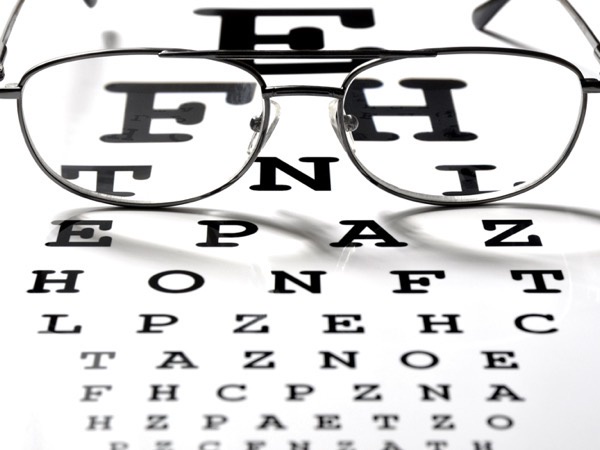
So here’s where I’m getting curious.  As we age, acuity fades.  I just had an eye doctor tell me that my ever-increasing need for light is normal age-related loss of “dynamic range.”  Shadow detail is disappearing for me.  It’s my current opinion that the acuity over time slopes downward to the right, and the experience graph slopes upward.  The combination is an “ability over time” graph that rises to some plateau, stays there, then drops off.

The initial upward slope is the learning.  No matter how perceptive the novice’s senses, they’ve got to learn what to look for.  When they reach their personal max, they level off as the ever-refining experience teaches them new tricks tangential to the skill that make up for their decreasing acuity.  Up until the point where that acuity has dropped below all thresholds and the practitioner is now incapable.

This seems to work for my experience in my first career I handled a lot of film.  I collected a lot of tricks to detect features needed to do my job, all of which made me pretty adept at some skills needed.  I was reminded each time I trained a new person, some simple quality about the product was required to be confirmed and I could use a half dozen tricks plus my under-40 acuity to confirm whereas the noob had no idea.

If all this seems rational, back to the SF novel.  Just what insanely hi-acuity map of a planet’s magnetic field must a visitor acquire to pull off milimetric-precision (beyond line of sight) navigation? What kind of standing-waves and transient ripples must one detect?

I’m expending way too much lifespan on an author’s lazy world building, but that’s what gets me about SF.  The really good ones, this never happens.  I never noticed one of the most important novels of the 80’s completely missed all forms of personal/portable communications devices in its future world.  Everything. Cellphones, all of it.  Decades after reading it (5x so far, probably more) I get to the end and go “Oh, that would’ve made a difference.”  I just missed the omission because the rest of the world-building was so good.


categories:

  • “life”
  • “moolah”
  • “politics”
  • “ramblings”

On Twitter, the amazing @mcmansionhell wrote a fabulous piece about bunkering in Architectural Review.  She wisely points out the shortcoming of living underground is that “...we humans require things from above ground to live.”  I want to stress that I completely agree.  In fact, once cut off from surface life, we suddenly have to replace a lot of services with tech solutions. Light, air & water filtration, etc.  And those tech solutions each have their own long tails that all get cutoff when the door slams shut.  Imagine some cascade failure due to running out of a lube oil that’s no longer made in the post apocalypse.

But I’d like to illustrate there is an even earlier failure than loss of surface services.  It’s the profound conceptual error that is easy for modern especially wealthy people to be completely unaware of.  It’s too easy to illustrate with Mrs. Howell’s quote about beets coming in cans, “Oh please don’t be silly.  I’ve seen them in their natural habitat, a Super Market.”  (Ep 71 “Pass the Vegetables, Please.”)

The failure I’m talking about is the inability to realize that survival is a process, not an event.  In fact, it’s a general event-bias fallacy, that many or most things have a boundary.  The fact is that a building isn’t a thing, it’s a process.  A person isn’t a being, it’s a work-in-progress.

Some of that bias comes from “progress” frequently equated with improvement or advancement.  So while from ages 10-30 one might see aging as progress, from 60-80 it’s seen as degeneration.  But thermodynamics tells us it really isn’t.  The 80 year old represents 80 years of entropy-fighting.  Sure, their health isn’t what it was at 30 or even 60, but their lived-experience is an immense collection.  And if their mental acuity isn’t able to recall that dinner on a beach in Italy or even if they had prunes for lunch 20 minutes ago, they nonetheless represent a towering investment in calories and spent lifespan of others supporting them.

With modernity and wealth comes isolation from the actual cost in lifespan of all that person’s wants.  They’re writing a check to a landscaper and green lawns are always present.  To a cook and meals are always ready.  To a financial services person and there’s always money in their account for the aforementioned servants and services.  The 45th president couldn’t have known the price of his bottled water anymore than he knew the preventative maintenance cycle of the airplane he’s on.

When one gets event-biased, one can begin to entertain the possibility of buying one’s survival.  It becomes a purchase event.  With that, the Apartheid Millionaire actually thinks he could start up a libertarian colony on Mars.  And broken down into events (or “milestones”) it becomes readily apparent one can.  It simply becomes an exercise left to the reader to imagine the million-mile and trillion person-hours trail of support, supplies, and knowledge that keeps him alive. It’s even possible some wit with a spreadsheet has cobbled together numbers illustrating that the Mars address is only slightly more expensive than all his others in total.  True, there’s the matter of delivery time, but that’s simply overcome by planning ahead.

Sadly, when one’s fallen down this hole, there’s no pulling them bcc out.  They’re now blind to the mechanics of the lifespan economy.  No idea what multiplicands are hidden in their hand-waving; “We’ll just plan around it” doesn’t account for the immediate staffers who just lost their weekend.  Much less the magnitude-per-layer multiplier as we increase remove from the mighty wealthy-person who’s hand has gone on to other important tasks.

So while our bunkered billionaires are told vitamin D supplements will make up for the lack of sun, they’re not beginning to consider that the props department labored all night to make that bamboo bicycle generator needed for Act 2.  And not merely blindness to “little people” but not seeing the endless contribution of everything around them into making them.  They think dad’s sperm met mom’s egg and the rest is history.

Process-centric planning is a lot harder.  Event-based means “Do we have enough freeze-dried meals on board?”  Process-based starts with a greenhouse but rapidly and continuously descends to some vulnerable mitochondrial chemical reaction because the trichromatic light is missing a frequency previously thought unnecessary.

We’re going to need a fantastic amount of materials science before we can even begin to think of exporting the systems we call “people.”  I’d venture to guess we’re less than 40% of where we need to be.  That means that tolerances currently found at CERN must become common to consumer products.  That we can place molecules instead of micrograms.  That we can audit reagents purity to atoms, not statistically molecular estimates.  That with all of that, we can command nearly mass-energy equivalent energy densities in a reliable and repeatable manner.

I’m not saying “don’t go to Mars” but I’m suggesting that just as every billionaire is a policy failure, perhaps we should recognize this bias as the fallacy it is.  That’s it not smart to buy an old missile silo and a boxcar full of ammo.  Maybe instead of remarking in awe of the apocalypter’s planning, we should recognize this behavior as a sign of mental illness.