The Basement in the Attic

My random meanderings on lived experiences & the thoughts they generate.


My sister is having a cake day that ends in a zero, so a big deal. I can't be there due to a lack of earned vacation days, so I asked about presents. She said that she and husband were getting into vinyl, so record albums would be cool. My sister, by youth and non-geek-itude has never suffered the embarrassment of asking vinyl records to do something they never could do, so she' setting into it for other reasons.

I think I've just figured out why.

They're both huge music fans, lots of concerts, really wide experiences in genres, no lack of strongly-held opinions. Music is important, enough so that in her packing the family up to visit the ancestral home, she included her Bluetooth speaker and deployed it for background music frequently. Even though my dad's living room has a pretty ok stereo in it, the CD collection is hopeless and she probably doesn't know about our local public radio station devoted to pop/rock/cool music.

So why records? Because they are apex-musicvores and have decent mastery of the latest repro systems (alll engineered towards convenience), and the process of live music is what makes it so attractive, they're seeking to make their casual music more of an event.

Look at steampunk. It's successes are wrapping 21st C. tech in Victorian clothing. This skin can be deep enough to go beyond simple deception, but none have gone so far as to achieve the results of “The Difference Engine” a truly mechanically-powered digital-experience. I'd like to suggest that this esthetic is, in part, about making the effortless experience more important. Ideally, we want it no more difficult to achieve the task—say, turning on the laptop—but if we can do it with an ornate series of brass levers and push- pull tubes, that would be cooler!

I believe my sister and brother in law, having perfectly internalized the music-on-demand experience made by MP3's, now they want the little-jewel-on-blue-velvet. Both grew up in homes with easy access to recorded music, and look back on records for their experience. Nostalgia is at play here, as that explains they're forgetting record's shortcomings. But they want a stylized version of that experience, something like the advertisements that lead to the bachelor pad audio in “Down With Love”: a scene of lovers en-snuggled by the fire, sharing the lovely tunes from the stereo that blends-in and stands-out from the dark, mellow wood paneling.

They've never suffered embarrassment by a record skipping on-air when you ran for a quick bathroom stop. Never spent hours on a mix-tape or audio-bed, trying to remove transients at least 10x too small for the analog tools of the day, or one of my faves: to really demo a gigantic sound system just completed, we had to place the record player (a magnificently expensive example of the day, in a stunning field-case so it could travel to each new installation of these sound systems) in a closed room separated by two walls from the theater where we'd listen. Inside this little temple, the God of sound sat on a throne of cinder blocks to isolate it from any floor vibrations. Imagine coordinating through those walls, because if that needle dropped with the master mute off, 20,000 watts would've destroyed $250,000 worth of speakers. These are my experiences of records, so I can't see any romance.

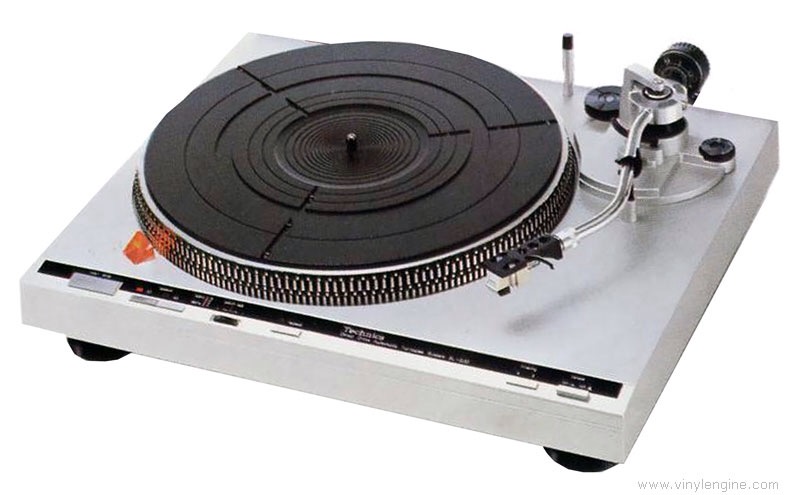
But they never suffered at the hands of analog reproduction, or the few events have been smoothed by the long climb that we call living. And so their love of music wants expression in more than thumbing FFWD when shuffle chooses an off segue. Now I get that. In fact, now I might contribute to that. Since I went through those experiences, maybe I can contribute more than just some wax to put on the platter. I think I'll go do some research on turntables and see what's out there. Or go dig my old Technics out of storage and put a new cartridge on it: for its day (the apex just before the first front-loading CD players came on the market) this was the best ttbl a real person could have!

So it's past time to change jobs, and I'm leaving the financial industry to return to non-profits. This is where I started, and should never have left: the only stakeholders should be the producers and the customers.

Upon giving notice, the old-fashioned and now-meaningless 2 weeks, my boss told me not to tell anyone. And I've not, though one person figured it out due to a slip. But it's a testament to the underlying lack-of-collaboration that the trend here is to undershare.

My experience with network geeks is they all aspire to the mislabeled position of “Network Architect” whereupon they dispense their opinions unchallenged. That's not great for a work-together attitude, but the really scary ones are the aspirers. Those who want to be are worse than those who are. The result is a floor full of cats, who might coincidentally line up in the same direction, but not due to their coordinated will or the management from above.

One of the principal mechanisms by which one of these cats establishes its territory is by hoarding whatever knowledge it has. Some of this is hard-won experience, and some is artificially created by hiding. Funny thing is, no one's figured out advertising yet. Wiki's are regarded with suspicion (they're just a fad anyway) though maybe they all get a buzz off the initial ask. I guess it must be fun having supplicants. Me, I prefer a fast-and-fluid continual conversation of the trivial and the significant. The routine exchange of ideas, especially challenging ones offered with understanding that the listener may differ, that's the stuff of life.

My part of the problem? Maybe I expect people to try harder. To share more (communism!), to recognize that ideas are free: give 'em away, you'll have more (Tim Housel's advice) But as I move on, I shall try to remember the advice of my good friend Mr. Booble-arski who said that the one constant at every job is you.


Today's rambling comes after watching the movie “Her” (2014) and in light of recent news that an application has “passed” the Turing Test.

The latter first: the ephemeral significance and permanent unimportance of the Turing Test and any current attempts has just smacked me in the head. The fact that this latest “success” did so by credibly imitating a 12 yr old Ukrainian boy makes it a perfect example of the mechanical Turk. The Turing Test will, for a considerable time into the future, remain like the “strapped chicken” test for the Star Wars missile defense system: a demo so far removed from the reality it claims to prove that only the most casual observer (aka “tax payer” “voter” “TV watcher”) would think it worked.

In the movie, the number normal human things the software does is ridiculous. The plot device (must I say “spoiler alert”) is silly because the OS already performs a million tasks between words uttered. Scaling it up to a billion—or even “times a billion”—would not materially change the behavioral adaptation the OS would need to work in the first place. It is not that she goes to a place between the uttered words, it's only that the author finally got there in Act 5.

And while I'm going on about 2 creatures of vastly different life-spans and -scales interacting, let's talk about emotions. They're the high-speed calculator for our brains; a simplified system that takes input and rapidly guesstimates an outcome, and signals the higher functioning system with this limited vocabulary. Happy. Sad. Scared. Mad. Our emotional system is this ancient part we inherited from the reptiles. So the OS having one is lame. Building it to simulate emotions for interactions is also silly. Data would no more have an emotion chip than need one. If you want your AI to have a limbic response, you could build one, but it would be like putting chrome bumpers on a 747. Where would you put them, to what end, and what were you expecting.

My point is this: we're a long way from knowing what our first AI will even look like, but it sure won't look like us.


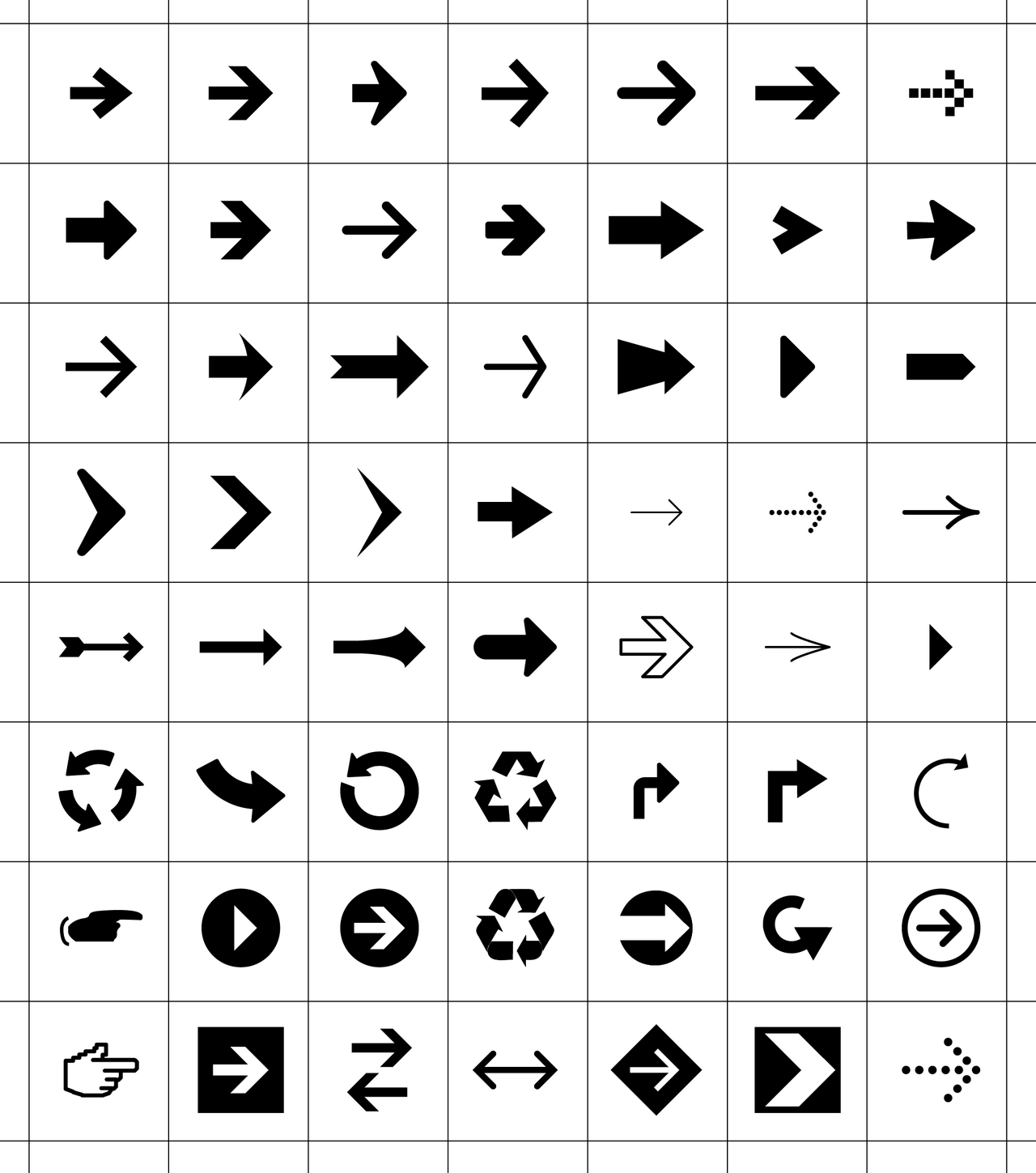
So when did arrows get so blunt? I remember how avant garde the 90-degree arrow-point seemed back in the 70's, but I'm pretty sure we relegated it to the “showy” end of the pool.

Today, I was looking for a way to indicate relative position in a stack of 3, and a search for arrow icons yielded page after page of stylish right-triangle capped arrows. How nice. But just as those safety scissors were inefficient at cutting, a blunt arrow is bad at pointing. Jeez people, forget your grousing about Apple's ruination of {some subset of }, we've clearly been adopting an “Arial Esthetic”: almost as pretty as the real thing, but nowhere near as good at getting the job done.

I think in our rush to tear down the other's heroes, we've applied our impoverished arguing skills and ripped ALL the experts down. Without critically thinking that there might be something to their expertise, we think that a 5 min wikipedia “mastery” of some part of the jargon makes us competent to decide that “their” expertise is fictional. (Dunning-Kruger Effect) So we go with whatever option is presented first/closest/loudest, and add our voice to the clamor proclaiming the virtues of this better, faster, cheaper option.

That might explain Arial-over-Helvetica, but why the blunted arrows?

I think that while the amateurs making the licensing decision that lead us to the triumph of Arial, they were also flexing their position on showy rather than pointy arrows. Hey, they LOOKED so cool and modren[sic]. After that, it was the gradual amplification of the tasteless, how MSWord is “just like desktop publishing.” After choosing the pretty over the gorgeous, we've eroded the stock to the point where today we have arrows that look nice, but are in no danger of pointing someone's eye out.


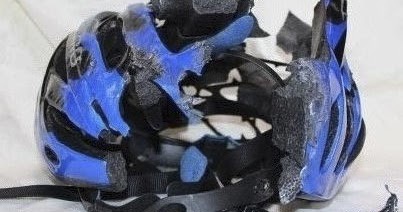
This is the blog of the retired chief doctor for Formula 1 auto racing. Brilliant stuff, he's been on about Michael Schumacher's Mild Traumatic Brain Injury (MTBI). As he points out, there's nothing mild about TBI's and it sounds like there's a whole lot of insidious. Schumacher destroyed his helmet in the skiing accident, and still got up protesting that he was all right. At this writing, he's clearly not all right, and the good doctor is eloquent about outcomes, including the near impossibility of predicting them. (In one case he mentions that progress during certain phases of recovery will literally occlude every possibility of prognostication.)

As a motorcycle rider, I've got some concern for my loved ones understanding my position on treatment in the event of my injury. Do not resuscitate, palliative pain meds only, and assisted suicide if possible. After reading that these are the choices of most physicians, I'm going to go with their wisdom: the outcomes of most extreme injuries are poor. Forget every episode of “House” you've ever seen, no one that sick in Act 4 is ever walking out of any hospital again. One of the many reasons I gave up on that show, even though the little miniseries of him in the nut house ended with one of the best episodes in TV history.

But I need to discuss this with the daughter and my Shiny Wife. I heard once that an annual family game-night was a method of broaching the subject, might try that.

Post Script from 11 years in the future: it turned out to be far, far more serious than a “Mild TBI.”


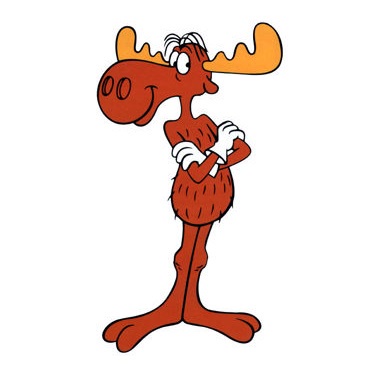
I'd like to humbly submit the verb “to Bullwinkle” as “persistence in spite of previous evidence of failure.”

I've frequently described my online-dating experience as “Bullwinkling” without any irony: I was absolutely aware that I was repeatedly saying “This time, for sure!” just after a lion had swallowed my arm. This is another aspect of what I call “managed optimism” and perhaps others might call denial.

The simple fact is that engaged in a task that's like shoveling a pile of sand with a spoon, you must either elect to forcibly shut down self-criticism, or abandon the task. Persisting while grumbling about the futility—altogether too frequently my modus operandii—is stupidly wearing on one's self and others.

Besides, Bullwinkling is not futile. I did meet my Shiny Wife, and the average of our online-dating experiences is probably darned close to the sorta-real average. (I, for 4 years and >1000 emails, she for 5 days and <50) Bullwinkle just kept his optimism in working on a task even though his previous tries failed.

So stick to it, fellow mooses, success is surely right around the corner,


My title is the height of redundancy or tautology, but it occurred to me with a simple thought. In many old SF novels, there's casual mention of getting or drinking a beverage in a bulb. This, from the days of glass bottles, or cans that required an opener.

Yes, the pop-top ended an era, and cans got lighter with the switch to aluminum. What's not obvious is how much lighter and how this was done. As recently as 30 years ago, you could stand on an empty drinks can, with a bit of care. Balanced carefully on one foot, you could barely brush the sides of the can, and it would start a series of deformations that could seriously injure a fingertip, not to mention looking stupid by standing on your own hand.

Try that today. I'm pretty sure that anything heavier than a bird would smash an empty pop can flat. So the cans have gotten much thinner and lighter. It would take an impressively strong web to hold six of the old, 3-piece steel cans in a convenient cluster. And there's the other part of the future I'm talking about: modern beverage cans are typically just 2 pieces now. The body and bottom are pressed out of a single disk of aluminum in a process that can only be described as mind-bending when you consider the results. The tops are made separately, and swaged or rolled on, that hasn't changed much.

Why am I prattling in? Because a perceptive soul need only examine this light, 2-piece container and realize that “bulb” would be a perfect description. The only thing stopping you accepting my opinion is the cylindrical shape and the proportions. (I think we'd agree that a bulb is about equally wide and tall.) I'm going to grant myself my premise and just say that with enough beers, we'll agree you could call them drinking bulbs.

So the future is right here, we've grown up with it and become used to it. Using that 30-year me to compare to, that was when I got my first fuel-injected car. The difference in starting these things cannot be overstated in Minnesota. On the coldest days, we would require all 3 cars to get just one started. Credit where it is due, my dad's wreck of a CarryAll (pre-Suburban, founding member of the SUV market) would frequently start under the most ridiculous weathers, but I have pictures of multiple sets of jumper-cables to series-parallel the entire fleet to get the first started. (Noteworthy is my littlest brother in the photo, wearing,his letter-jacket and docksiders. No gloves, hat, scarf, or real coat and all the cars showing frightening coatings of hoar-frost on their skins: clearly -20F or colder) And now we think nothing of our kids dressing as my brother did, hopping in the car for a 20-mile commute to high school.

I've blathered earlier about this slab of Gorilla Glass I'm typing on, we simply accept that every bar-bet can be settled in seconds with a Wikipedia visit. We grouse about the price of gas while we regularly enjoy >100HP engines that return +20 MPG in cars that promise a 90% survival rate in head-ons up to 35mph. While playing shuffled songs from a library of 10,000 albums that fits on a Hello Kitty USB stick. We enjoy computational density in excess of every major human accomplishment up to the 21st century IN THE PALMS OF OUR HANDS. And we enjoy computational density in excess of every human accomplishment up to the 21st centurycombined on our desktops. No, really, count the flops of the bestest business-class desktop of 1999, compare it to the mediocre laptop I'm ignoring right now.

I'll wrap this up with embarrassing hubris. I'd like to suggest a new edition of William Gibson's famous quote, by changing the word at the end: The future is here, it's just just not evenly observed.


Staying with the father, he's 5 days on a new knee and my turn to stay overnight while my brother is out of town. Stressful, I'm worried that something might happen, which is my standard self-flagellation and worrying about the most ridiculous things. It helps to admit that I'm a nutter when it comes to finding things to worry about. I'm distantly fascinated by how efficiently I've trained myself to find worries.

So this may be one of the first times I've spent the night in a long time, and similar to worries, unbidden to mind comes recollection of the brief dalliance with J. This is the mere week or 2 with her, wherein she ended it after one last romp. My tone is all wrong here, I've no regret or self-injury. I've decided that, to her, I fell in an “uncanny valley” of desirable but not enough to overcome some reflexes born of bad experiences. More benevolently, she was having a good time being a single mom, I'd have been (at best) a distraction.

Still, my negative reflexes work efficiently, and so these two trains of thought run on parallel tracks.

My wise friend V has said that she knows when she obsesses, it's to distract her from the hard thing she should confront. So too I think it occurs with me, and I wonder what left-field thing is standing there while I'm distracting myself with train-spotting.


My daughter adopted a grey-and-peach “box cat” in 4th grade. There was a box full of kittens found under a teacher's house and C chose Miu Miu. A shy and somewhat evil cat, she's now 16 or so, and time is catching up.

Whether due to Miu Miu's nature or our behavior, she became a very talkative cat. She'd make a funny “grrr” on surmounting a table or bed. She'd announce her entry into any room, and she “myah” repeatedly when something tasty was near. She talked a LOT.

Then, about 3 years ago, she went outside one day and met up with something bigger and meaner than she was. One side of her face was hacked up, with one puncture wound near her eye. Antibiotics and patience, we were all focused on that eye, and she recovered. Except she didn't, and the rest of the damage, plus some typical age- and diet-related dental issues, and surgery removed a buncha teeth and sewed up the stuff missed in the initial round. Now she was recovering, and now it became apparent that she'd lost her voice.

Now there are times when you'd wanted her to shut the heck up, but once she could barely whisper, it dawned on me how much I missed our conversations. Well, “exchanges” ok?

Then, a couple of months ago, I realized so,eying else was wrong: she was going deaf. She no longer came to the door, a trait so reliable that I'd suggested a burglar alarm based on her movements. (If he door opened and she didn't immediately rush to it, call the cops.)

She's pretty much completely deaf now, she was a cat who'd reliably come when called, and ran when voices got raised. She'd be at every door on nice days, to sneak out. She never missed a food bowl being moved or filled.

Now, when asleep on our bed, she won't wake unless touched or you sit on the bed. In our 97 year old house the floor is a symphony of squeaks, yet you can sneak up on her with no effort at all. She's frightened by a lot of things, always a bit of a fraidy-cat, but now she's surprised all the time.

I wish I could impart some lesson here, this just adds to my dismay at how poorly prioritized our bodies are, preserving movement as the priority when processing and I/O are so much more important. And how is it big pharma can come up with nothing more targeted than the repackaged opioids that dim our wits along with the pain? Loosing the Input/output systems should get ever greater priority in our geriatric care. My hearing aids should be a superpower, not the expensive penalty they are.

And my cat should be able to talk, to hold exchanges, until she no longer can.


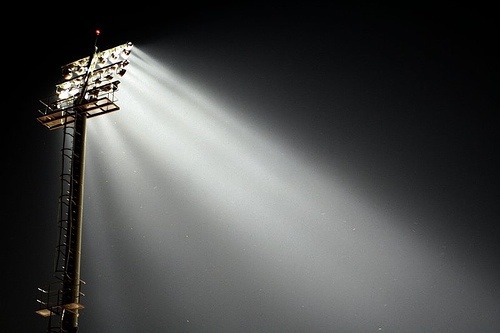
M and I were driving by the local college's outdoor fields, fully lit but with no players, and marveling at the light. Deep night all around and there is that bright-as-day field. But it's weird, there are no shadows, or lots of faint, little shadows which is wildly unnatural. At 45 degrees latitude, there are only 2 days a year when the sun hits the true zenith, which would give the brightest daylight and the smallest shadow, although that shadow would be very dark if the day's really clear.

To get shadowless daylight, it's either cloudy or magic hour, both of which would have pretty different color temperatures compared to the stadium. The HMI lighting would be extremely hot, but the color-temp must be kind of “paper white.” 4-5000 K? Magic hour hasta be a around 9000 at least when you're in the tree-lined streets. (My guesses here, gentle reader.)

The point is, the more you examine that brightly lit field, the more interesting it gets. Fractal fascination, I'll call it, you just keep looking closer and getting more for the effort. Is this what the ancients thought about astronomy?

Anyway, next time you see a stadium, especially at dusk, take the opportunity to marvel at the quality of the light.