The Basement in the Attic

My random meanderings on lived experiences & the thoughts they generate.


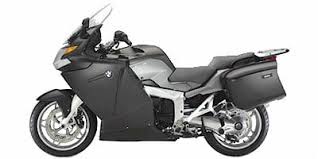
Thanks to the advice of someone properly receding in history (Note: write a post on good advice remembered from people best forgot) I took up motorcycling about 5 years ago. Since then I've replaced each moto with one that was twice as complicated & powerful. I've reached the limit, with a 4 cyl, +600 lbs, 150hp superbike, and it has some problems. It doesn't have any problems, I do: I have to learn how to ride it. One of it's problems is not handling low engine RPMs with frightening consequences. I think I've figured out the problem [GEEK WARNING] is the transition from open-loop to closed-loop fuel injection. But that's not important, here's what is: Why keep something who's design-flaws couple with my bad habits in a manner assured to cause problems?

The answer is in the name. My first ride was called “Clarity” because that's what I got from riding and what I needed as I embarked on single-parenthood, single-hood, moving back to the home city, and working for a most passive-aggressive company. That motorcycle provided it in spades. The second was named “Serenity” s both a play on the movie, and once again, what I got from riding her. Yes, I anthropomorphize my motorcycles as female because I need to have an intimate relationship with them, or I'll get killed by my inherent clumsiness. In other words, if I don't manipulate my subconscious, I'm concerned that harm will befall me.

Now, the newest, barely a year in my hands, is named “Tranquility” and revelations about her nature would seem to recommend a rechristening, perhaps to something more like “Flaming Chainsaw” or “Speeding Ticket”. But no, she's still Tranquility to me, because when I've mastered my limits and we're swooshing along a nice road, trust me, tranquility is found. I'd be happy to take you for a ride, I think you'll agree that the jet pack has been invented, it just doesn't look like the promotional art from the 50's.

**Edit-added:**I keep revisiting this subject, for emphasis or just to answer the question “Why bother with this high-strung, temperamental, fucking dangerous motorcycle?” I guess it's to regain some of the wonder of the flow. There's a problem with that, I'll admit, in that without the novelty in the route, the ride becomes just another commute. It's why cars have stereos and cup holders. So we add risk to put in novelty to satisfy the wish to go back to that first realization that we're actually doing it.

One needn't risk higher speeds on well-known routes, but that usually means finding new routes, and that's an amazingly hi-risk activity on a motorcycle. Navigational uncertainty takes a huge amount of background attention, especially for us situationally-challenged. (A navi doesn't help much, mine simply helps with the foundational concern of not-being-able-to-get-there.) This is why riders seek route-novelty in the form of road-trips on rural routes: much safer to enjoy novelty when you can see to the next curve and the waypoints are minutes or hours apart.

So it's the flow of managing this dragon, especially thru city streets. People just don't get what it takes to get home. And that's ok, though kind of sad. I wish I could share.
categories:

  • “life” tags:
  • “history”
  • “precedent”
  • “tradition”

I can't remember if it was James Burke's “Connections” or Jonathon Miller's “The Body in Question” but one of the two addressed permanence and the 2 principle ways to make it.  You can either make it hard, or make it renewable.  The comparison examples are a statue and a fountain.  The statue requires an immense investment in energy up front to form a material so resistant to erosion that it will last satisfactorily long.  In the end, though, entropy always wins, as one can see in really old graveyards: the tombstones are smoothed to the point where we have no idea who was buried there.

The second case is the interesting one, the fountain.  Here, the investment is in a system that doesn't resist entropy at all, but continually renews.  We get into a serious Ship of Theseus question here, but let's just accept that second-by-second, the fountain renews the form of the creator.  In this case, there's a constant, low-level investment in the ever-renewing form.

And, in watching some birds milling in the distance this evening while pondering the presence of our first grand-infant at our wedding, the importance of continuity came to mind.  It is not in human nature to think this way, but nothing is permanent.  We all will die, the earth will be vaporized by the sun, the universe will die it's heat-death.  Water erodes the mightiest stone, the greatest river can have it's course changed in seconds. The point there is that this thing we call “the world” is an example of the fountain-school of permanence, it's constantly renewing.  So we humans place an emphasis on continuity.  And for said grand-infant to be told, say, in her teen-hood that “I remember when you were at our wedding” by her wizened grandparents will be one of those things that kids nod and smile and forget almost as quickly as the batty grandparents.

And yet, we don't.  I was told that, as a baby, I'd sat in the laps of my great grandfather (for whom I'm named) and (dubiously) Buckminster Fuller.  I discount the latter as one of those myths, but I consider the former as if it had some significance.  Just as, I hope someday, my daughter considers that (and there's a photo of the event) the time she was held by her paternal great grandmother while her mom looked on.  That both of those women are now dead, she's the carrier-on of the continuity.  We hand the baton, however ephemeral, and smile as it's carried on away from us.

Photos, and the interwebs, have changed a lot of things, but we continue to marvel at the preservation of the experiences.  It's funny what goes forward, and how much it's changed but that memes, trends, and cutler over all comes forward, well, that's the upside of getting old is wondering at all the non-changes in the novelty.

We are each of us carriers of continuity, and that's kinda cool.


categories:

  • “life” tags:
  • “growth”
  • “learning”

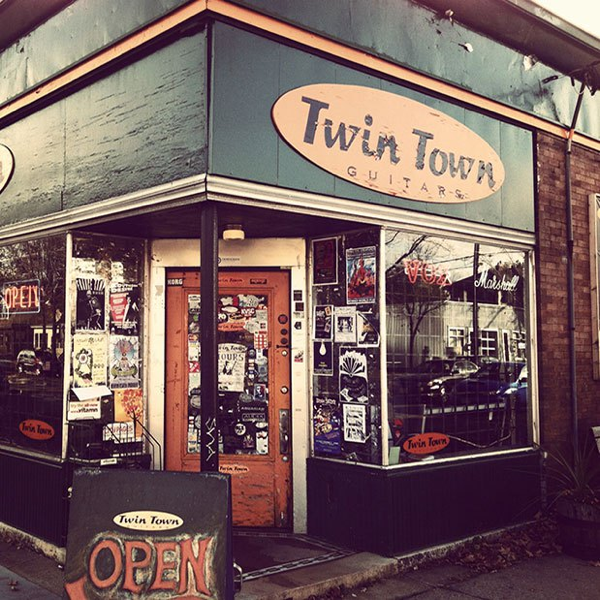
Guitar Town, MPLS

In prep for my wedding to M, I went to a wonderful guitar shop to pre-pay for the battery powered PA we'd use for Rick to play/sing and us to be heard vowing. Sadly, said shop didn't take prepayment, so I'll have to show up on the day-of to pay and pick it up. One more thing to worry about. The shop in question was in the neighborhood I lived in with S, near a restaurant with mediocre food but pretty good ice cream. I rode to the triplex we used to live in, someone sitting on the stoop. I wanted to ask if he lived where we did, did he know about the suicide before we lived there. The bleached section of floor never unnerved me at the time, though I think of it now as I do several other adventures in life, only intellectually grasping a listener's growing horror. (A wildly stray golf shot flying through the sunroof and hitting no one in the car; a school bus driver depositing a 9 y. o. Gringo in a neighborhood miles from his actual home in a country he'd only lived in for 2 months; S and I driving over that freeway bridge only minutes—15 at most—before it collapsed into the river.)

Anyway, here I was in that old neighborhood, which held literally zero resonance, 2 days before the 5th anniversary of meeting S. I looked at the tiny upper floor screened in porch we sat in, and had not a moment nor inkling of nostalgia, perhaps the sun was too bright and the temps a tad too high for me to recapture even the sense of the quality of light from that too-infrequently enjoyed perch. The other 2nd floor tenant was a professional mooch, so we tended to stay in or out, but never about.

What I felt was soaring gratitude, almost manic, for being both so over S's scoldings and for the huge personal-growth that leaving her engendered. It's like getting kicked in the head by her shook loose all the adultification that old lifestyles had buried. She was my first serious, long term (only 18 months) relationship after divorcing K, and it was a whirlwind of fun while it lasted. The fun, for it was over before the relationship.

It's amazing how blind I was to S's emerging self, the towering vanity unfurling from the peeling chrysalis of the poet and serious feminist. Now she's the wife of a mildly abusive semi pro musician in suburbia, a million light-years from volunteering in a women's prison teaching creative writing.

All this is coming back only to express here, I've honestly been weeks without recalling her, months since wondering about her and my own light-years since I unknowingly cowered from yet another of her disapprovals that now seem so stunningly out of place. I'm utterly insensitive to class, but I guess maybe she wasn't and perhaps it was my failing (in her opinion) that I didn't suddenly lift her. It may've been a knocking-down strategy, an equalization, to scold me, but I can imagine that if she's doing it still, what she's described as abusive by her husband may simply be his trying to crudely fend off her wearing assaults.

The lesson you should take home here is none of that tone, but the glee I had turning the moto around in front of the Dupontment, a skill I never had when living there, and a beast of such power and a sophistication that I (a true car geek) couldn't even have imagined back in those days. The joy today even overshadowed my brutally slipping clutch, the inconvenient heat. Embrace my standing atop the mountain, with nothing but a gently sloping meadow between here and the summit, enjoying the view back along the difficult trail taken to get here, applauding the accomplishment of my ascent, and looking forward to the little bit left to reach the peak where M awaits with friends, and Rick with his guitar.

categories:

  • “life”

Ride the Divide is a not too bad documentary about a pretty torturous bike ride. Amy Petty has 2 songs in the soundtrack, this missive is about “July.”

The song is about lovers leaving or apart. (yes, I've discovered linking) It has a wide dynamic range and slow beat, starting with just her voice in a quiet range, rolling up to full band and chorus, then returning to the intimate, then rolling back in. In the chorus, she's nailing notes in a powerful voice like Dame Adele or Flo have trained us to appreciate, though I think they really just released the natural love hidden for so long in all of us.

And it's that soaring voice that I want to write about, how the note and effects and context of this one little part convey an image of someone that never was. I hear this song and am filled with a wistfulness for a day in July some years ago when I met someone who I thought was this note. Of course that was artistic license, I know that I simply meant that some characteristic of this person reminded me of some of the soaring aspects of this note.

But, fascinatingly, it became apparent that I'd met that person at the end of the phase of her life being all I find soaringly possible in this note. Appearance only years after the end of the relationship, I enjoy my explanation while understanding its limits.

So this note sums all this up: becoming enthralled by the poetess who's period of creativity was ending as her station permitted a shift toward a self-focus, my loss of that and the reward for figuring it out, all of this rides along with Amy Petty singing this song.

It's not merely evoking emotions, it's recalling the evolution of them. Like recalling a recollection, and I'm a sucker for meta-.

Anyway, I shall off to exploit this mood for writing to work on a story about the events of July 20th, 1969. It may even appear here, redacted a bit to preserve sensibilities.

categories:

  • “life” tags:
  • “death”
  • “history”
  • “nostalgia”
  • “recall”

Watching 1992's “Resevoir Dogs.” In 1992, the daughter was 2, her parents 33, and I know we—parents—watched this movie, maybe even during theatrical release. K (Mrs. and mom) was as much of a movie fan as I, she had worked for a PR agency that did a lot for productions in Chicago, as well as some studios. Back then, we both had dreams or wishes or wants to work in the industry, even tangentially. The buzz around this film was pretty loud.

Now, I've no stomach for the cruelty. I wonder if we can roll it back, if we've become so inured to the intimacy and energy in the violence, that we simply can't go back.

And I can't say I remembered the movie. Before reading Wikipedia and imdb, I couldn't recall the torture and watching it I have to say it's forgettable. The only verities are Tarantino's fame and the bar he raised for savagery.

So it's odd that this is a nostalgic night, 12 months ago my mom was actively dying, 28 months earlier K was actively dying, and almost 4 months later my brother would die. Mom, BFF, bro: it sounds worse than I'm feeling it, perhaps to my failing. I know my sister's having a hard time today, she's said so in an email earlier. My response was to remark that because of her Lewey Body Dementia, the mom I knew had checked out a long time before. I was pretty clinical by May 2012, because I'd been through it with K. And she was coherent 5 days before when we all stood around her bed and she polled us each and we all agreed that it was over. And by Thursday, she was dead.

Mom's spiral was longer, more gradual, and both harder and easier. It was almost like she'd quit eating a few weeks earlier, and just slowly died. We'd lost the ability to converse several months earlier as her speech degraded below my poor hearing's threshold. Her cognitive failings had begun to be a problem 2 years earlier, and the first inklings of this slow decline, like the melting of a great glacier, appeared perhaps 3 years before that. It was during that slide, from “something's wrong with mom” to what I think of her mental departure, that I realized hat my mom was the smart one. My dad's one of those good student types, he nerds out on stuff he's interested in, and delivers. But mom was pretty damned close to a genius. And born at a time when the nuns still retrained left-handed girls to be right-handed, when her conservative dad didn't think college was for women.

My brother fell down the stairs. Diagnosed with colon cancer in an eerie repeat of K's horrific late-diagnosis, his progress was uneven, ups and downs and inevitably more downs. Unlike K, there was no clear line for game over, it was more of a surprise. Actually, it was a nightmarish whirlwind of getting him moved home for an undetermined period of time, only to die about 4 hours after coming home. He was tired out by the transport, went to sleep and never woke up.

So I'm sitting here, typing to you of my nostalgia for three people, while trying to remember what was important or of value about the first of Tarantino's movies. You know, I think I'm done with this kind of violence, the intimate kind. The long, drawn-out death scenes kind. The death-bed confession that undoes whatever honor there might've been. And I almost thought I'd give “Jackie Brown” a try. It's just not my cup of tea anymore.


categories:

  • “ramblings” tags:
  • “outdoors-inside”
  • “spatial-perception”

Good chance I'm repeating this theme, gentle reader, apologies in advance. There's a phenomenon I've experienced that puzzles and delights me. Given mild temps and calm winds, as the light fades, just at the far end of magic hour, I've had the occasion to perceive my out-of-doors as suddenly being inside. That the infinite is bounded. That all the world's a giant room.

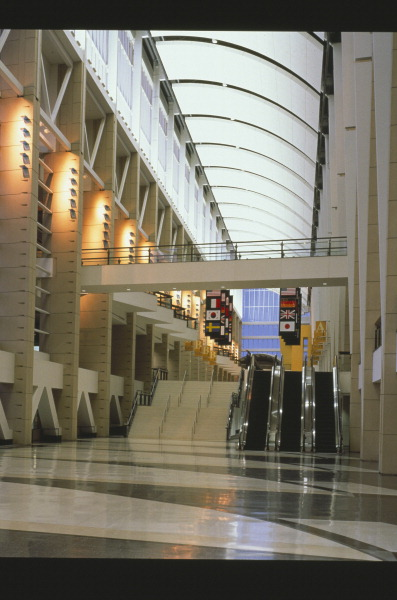
This may be aided (and first happened after) by a past career inside some of the largest rooms in the world. When you get blasé about a mostly open floor that's larger than a city block, when one begins to lament 48' ceilings in the new building as being such a pain compared to the 54 footers in the old building, well, I'd like to suggest that one's definition of “room” may be skewing.

I'll note that still winter sunsets won't permit me this fun shift, nor does direct sun, and breezes break the illusion. But like tonight, the first serial-spring-day, the sun is sliding down in a sky so calm that even the Corialis Effect is taking a rest, and I eagerly anticipate my room suddenly blowing out.

The Apollo astronauts had the unique view of seeing the earth from just far enough that the atmosphere was visible as the thickness of a fingernail. As many other astronauts have remarked, all of human experience has taken place within this thin shell, but only Apollo afforded a far enough vantage to equate a bodily unit of measure. (From the ISS and shuttle flights, the atmosphere was a Stoney's throw below.)

My thoroughly terrestrial version makes me think of all the trash we toss around our “room.” Who would light a charcoal grill inside? (Besides the Greeks at Delphi.) Littering gets damned personal inside your house.

It also fascinates me that there are places on earth that have such a narrow temperature range that one could encounter this room-feeling in any season. Typically at low latitudes and high altitudes, such a climate boggles my mind, here, where we seasonally swing over 120 degrees (F) thru a year. I'd love to visit them though, Cuernavaca is on my list.

But. Back to my room. It has birds in it, cats, dogs, squirrels, neighbors...I could go off into Yellow Submarine lyrics about the entirety that is encompassed by this all. And it's lovely to consider, to explore what would happen if we could bottle this and share it. To make my version of The Total Perspective Vortex not as a disciplinary tool, but to give everyone a glimpse that it's effectively a closed system, and we've been treating it like an open sink.

I implore you to try thinking about it for a bit. Try to contemplate the edges of your room or house simply being a prop or set inside a much larger sound studio. That all you'll ever know is bounded and constrained to a boundary layer thinner than paper, on a ball so tiny that its entirely likely no one's found us yet. We're all yelling “Who?” as loudly as we can, but Horton's nowhere nearby.

Photo Source.


tags:

  • “berkers”
  • “buffet”
  • “munger”
  • “omaha”
  • “roadtrip”

Greetings Gentle Reader,

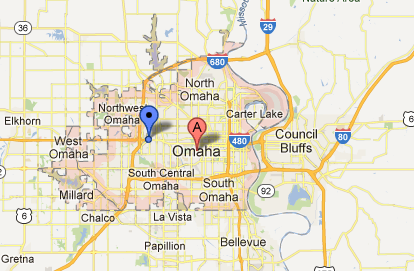
So we road-tripped to the Berkshire-Hathaway's annual shareholder's conference.  M owns a fraction of an A-, or maybe it's a couple of B-shares, so we joined her oldest son on a road-trip to Omaha, NE.  Also visited M's oldest sibling, lives just across the river, where the corn side's crunchier, and we had a nice dinner with them on Friday.  Saturday, we filed into an overflow room (after a late start) and listened to the Warren and Charlie Show.  They dispensed a lot of wisdom, curiously no questions about behavioral economics around which most of their advice centered.  It was witty and funny, and in spite of their humility, they're clearly the smartest guys in that room (40,000 people attended) which added even more to the experience.

But it seems to me that the “secret sauce” of B-H is simply that they buy old brands.  They are choosy once they get a lead, but ultimately, they play in an area of very limited size.  I mean, now that they're majority holders of IBM (8%?), Coke (9%?), BNSF…who else is gonna buy that much into them?  Who's gonna top them?  And who wants to repeat their performance, they're playing in this tiny field and they've got more than enough money to dominate that segment, so what's the point?  They're insanely conservative, by sticking to brands with a track record, and avoiding tech, the result is they're fascinating to watch, but silly to emulate.  The thing to do is 180 them, and try to get off buying new brands and make them last.  Get into the business of making brands solid.  Of course, people have been trying that forever, and it's paid pretty poorly, tending to reward the pirates and plunderers.  Still, listening to all the “what advice do you have for [a young person starting out]?” I started to get bored.

I'm also impressed with how infrequently they answered the question.  They talked a LOT, but they said incredibly little.  For example, in an earlier remark, they dropped the hint that they'd seen bad business plans, and some outright fraudulent.  When confronted head-on to recite those cases, they demurred, and essentially fell back on the “you can smell a rat.”  M's son was disappointed, as he thought they should've taken Enron as a specific example and taught the lesson.  Sitting here now, I wonder if they didn't want to make their opposition (the fraudsters) better, or if they were more in “smokescreen mode.”  As I said, they were incredibly entertaining and there were a lot of very good life-lessons, but they were not giving hard answers.

Really had a good time, I was surprised by Omaha and environs, I'd like to go back.  We may do the moto-trip this had intended to be, when the weather gets better.  Snow, or May 3rd?! WTH?  I'll tell ya, Hwy 169 through MN is awfully pretty.

My advice: This is like motorcycling and parachuting: If you're even thinking of this annual event as something to see, then you simply must do it.  The only loss is in not  doing so.


categories:

  • “motorcycling” tags:
  • “climate”
  • “motorcycle”
  • “weather”

Watching the documentary “Harley Davidson” on Netflix. There are many not-very-sequiturs here: I don't ride a Harley, never got that bug, and we're very likely to see snow tomorrow night. So the big questions in this viewing experience all center around “Am I torturous myself?”

The most obvious is watching people riding in photogenic riding weather. We're a long way from there, we had a week of cold rain today. Snow is looming, end even though it might only survive a day, it's just impossible to imagine that somewhere, right now, someone's unable to imagine the weather I'm in here.

Second up is the movie's whitewashed presentation of the bikes and its culture. Sorry HD lovers, but I really don't get the retro movement in moto's, not merely limited to HD's. My moto rides have consistently gotten more sophisticated, proud to say I'm as far into the 21st century as the conservative industry allows. (Yeah, it's not made in the USA, yes, it's German.) But the really awful bit is he attempt to sweep the excesses of the culture under the rug. In the early stages, I thought it was HD or studio legal just redacting whole pages of history and statistics, emphasizing the kumbaya aspect of moto culture (undeniably real) over the outlaw (microscopic in %, but megascopic in impact).

Ahh, but then we get to the Harley Women section. I can't begin to describe the patronizing here without being guilty of the equal sin of “white knighting.” So I'll just say that this part pleased no one outside of the HD boardroom.

So why wast 30 mins—that's when M got out of the bath—watching this? So I could test out Wordpad on my iPad? Inflict this writing on you? Warn you to stay away? Or am I so lacking in the riding experience that I'll watch utter crap to get even a distant whisper of it?

Hint: when people list things, they put the most important or likely at the end.

Edit from the (not very distant) Future: Today's heat makes it completely impossible to imagine the weather during this writing.  No wonder we have such trouble understanding [AGC](http://en.wikipedia.org/wiki/Anthropogenicclimatechange).


categories:

  • “blogging” tags:
  • “abilities”
  • “addiction”
  • “habit”
  • “my-limitations”
  • “podcasts”
  • “skill”

Greetings gentle reader. Reviewing my contributions to Facebook recently, I can see how tiresome that venue can become.  It's a soapbox and bullhorn for whining.  On the other hand, I've gotta admit I've seen some fine stuff, and get some nice words from people when things are tough.  (EG: The anniversary of the birth of my departed BFF.)

Now I sorta get why I don't like podcasts, or -casting, even though I was a college-radio geek.  And audio nerd.  Podcasts go at the speed of the speaker, not the listener.  And after enduring a lifetime's boredom in my 1st 3 minutes of a podcast that any sane person would say I should love, I foreswore it and the whole art forever for the 21st time.  Perhaps savagely managing the FFWD button might save me, but what if I just wanted to listen?  I think I have too little tolerance for vocal tics so maybe that's why I crash on the whole thing.  I don't enter the field myself because my inner director makes Cecil B. DeMille look like an amateur.  Not living up to THAT bar is unworthy the frustration.  And we won't even start on vlogging, wherein the entry fee is so much higher.

So why, me who rambles in writing more than most, can't get into content creation on this forum?  Plenty of ideas, I deceive myself into believing.  Some propensity to blather entertainingly (Hey, I'm the funniest me I know!).  I even get that I need to re-read and edit, to re-work with the reader in mind.  Some of it is the idea of learning Yet Another Text Editor, though I'm putting my hopes on MarsEdit to make that easier.  Some of it is the loss of old content—I've migrated my unfrequent writings about 3 times, each with a massive heart-wrenching loss.  Then again, as you can see over there on the right, stuff goes back to…to….too long.

I've no answers, dear reader, and thus I give you another dead-end entry.  Is it a canvas at the end of the road that the coyote has artfully painted a tunnel in the nonexistent mountain?  Is it a brick wall?  Is your headlong rush toward it like a neutron or a neutrino?

I wish you health and wisdom-earned-gently and we'll see.  Bullwinkle's wisdom (“This time for SURE!”) guided me to my last and greatest love, maybe I can relight that optimism herein and provide the world with some small thoughts worthy of consideration.

Addendum 1 (of hopefully many): Just upped my downloads-count to 3x the recommendation, and voila, all my content in one place.  Now to edit, perchance to post.  Ease-of-use makes publishers of us all.


categories:

  • “blogging”
  • “networks”
  • “ramblings” tags:
  • “random-crap”

Greetings Gentle Reader,

This is incompletely formed, but on today's lovely ride home, I was wondering about the myth of the package delivery company taking all right turns.  Subject of a Mythbusters episode, I believe they missed the problem by focusing on gas-mileage.  Fuel economy, if you prefer.  Anyway, I'd thought that the deciding factor in path-improvement would be the labor costs, not the equipment-operation costs.

Then I thought about ubiquitous robot labor, and it forming a union to demand...what?  And back-tracking from that, it occurred to me that one impediment to ubiquitous robotics is the societal costs of failure.  Google's gonna be sued to the moon for the first pedestrian or passenger killed by one of their self-driving cars.

Let's get specific, I'm not talking about the cost of the lawsuits for failure, I'm talking about the costs of a risk-averse corporate entity trying to insure that all their networked-distributed cyber labor will not suddenly develop a taste for meatbags.

We have precedents.  The aviation industry, specifically TCAS, and the medical industry, specifically, the ABSENCE of network-aware equipment both serve to illustrate the costs of future robo-labor.

TCAS (Traffic Collision Avoidance System) is a self-contained autonomous warning system that depends on all planes having radar and TCAS.  It has ways of coping with small, non-TCAS or non-radar equipped traffic, but it's pretty limited.  It's a phenomenal accomplishment but it took man-centuries of labor to be certain it would not fail in unpredictable ways.  Also, that it would not interact in unpredictable ways.  Now the FAA has decades of skill at setting lofty standards and vendors have paperwork tracing every single part and every line of code to prove the soundness of their product.  This is all accessible, so if there's a problem, everyone along the chain will hang.

The medical industry has even more history in tracing every piece of a product's creation.  The FDA imprimatur on my hearing aids has made them 800x more expensive than the sportsman's versions, but they've lasted on my head for almost 2000 days.  Like FAA paperwork, this is such a high bar, that medical equipment makers eschew the Bluetooth this or WiFi that, and barely even employ RFID tags.  The point-and-shoot logic of the barcode is embraced, because everyone can prove they've hit the right target, and received the right response.  But does that IV pump next to your bed signal the nurse's station wirelessly to say you're out of saline?  Yes, it's called a “beeper” and it's annoying as heck.  Oh, and if you're room's door is closed, YOU have to signal the nurse that the signal is signalling.

So, how do these two similar stories of cautious control play into self-driving cars or electric housekeepers?  They tell us that if we as a society are even half as careful as we have been in these 2 cases, then it will be a long, long time before you ride to work “handsfree.“  I'm suggesting that the pervasive robot will perpetually be “10 years away” like fusion and AI.  We'll have plenty of successful trials, Google's cars, roomba, maybe sorta-anthropomorphic transfer-helpers for EMTs and nurses.  But just as a robotic factory is confined to cells, and the networked controls between, beyond and outside those cells is more expensive than they are, I'm beginning to think that the automaton's arrival will be slower and lower than we expect.  Before we get Rosie, we'll have smart(er) carpet.