About Occupy.
categories:
- “life” tags:
- “change”
- “politics”
- “revolution”

Greetings Gentle Reader, I've been wondering a lot about Occupy. On the one hand, the diffuseness of the message and the effort makes me wonder if the liberal side politics has lost it. Not that a professional politician would be within a mile of an Occupy gathering. I'm partially as confused as my friends who identify (overtly or not) as conservative. What are these people on about? How is it they're getting attention for...what, exactly? Can they go away now?
On the other hand, I'm fascinated at the self organization that's going on, and I recognize that there's a real something happening here, below the muddy waters. Here in MN, Occupy is up against the impossible, winter's going to solve all of the gov't's problems. It'll cost 20x the calories to keep one protester on-station overnight in Minneapolis than it will to keep the entire crowd in Oakland. Of course, Occupy Oakland's having to fight more dramatic battles. Minus 20 will do what all the cops in the Midwest can't do.
But here's the thing: Occupy is the “grey goo” of social movements. In scifi, one of the many plot-devices is nano tech run wild, where the little robots get loose, and turn everything into a uniform mass of grey-goo, a slime of nanobots. Occupy could be the same thing, a small virus that gets loose, and slowly eats the entire political system.
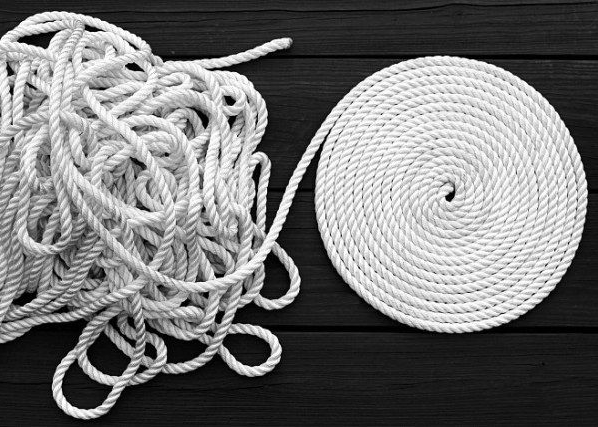
Look at that photo, she's right. Complexity is not confusion. It is confusing, and for an audience used to the highly refined sugar of bumper-sticker-politics, it's easy to dismiss Occupy. Fearing the unknown, or even the just-blurry, is easy too. In either case, the sheeple run and shy away from this oddness.
But read a little about Open Space Technology. I've been to the opening of our Occupy's General Assembly, and they've got a method, and it beats Robert's Rules of Order. Is it possible that we're seeing a new organizational technique used to create a social order of a career-less future? Is it possible that we organize along the lines of the individual contributing universally instead of specifically? A culture of omnivorous makers instead of one of single-skilled specialists?
One enabler of this—and we're not there yet, folks—is putting enough smarts into our tools such that they can make less-skilled users able to produce with them. The difference between a horse-and-plow and a micro-tractor is that the tractor's higher power-density means a plow that does more of the work itself. Mastering a horse-and-plow is really tough, it requires a lot of muscles and callouses of the operator, and those are not earned immediately. Whereas the micro-tractor and a really well-formed plow could require only the skill of walking broken-ground. True, that's pretty rare in urban people, but it's a lot closer to ubiquity. For now, the only intelligence in this example is in the shaping of that plow, and attaching it to something strong enough to pull it. Pretty soon, though, there'll be enough silicon-smarts in a garbage truck that almost anyone could take up the task. Then would we all take turns hauling trash?
I don't know. But I do know that I share Occupy's dissent with the status quo, and I'm beginning to “get” their underlying organization and message, and I like them. It may be that the US is leading once again, in the one area we've always lead in, the generation of ideas. And if so, we're leading in a direction that the world's largest economy is not happy with, because with over a billion in their peasant-class, they've known for a long time that there simply aren't enough bullets to reverse an uprising.
Fortunately, Occupy isn't an uprising, it's a slide-rising.